


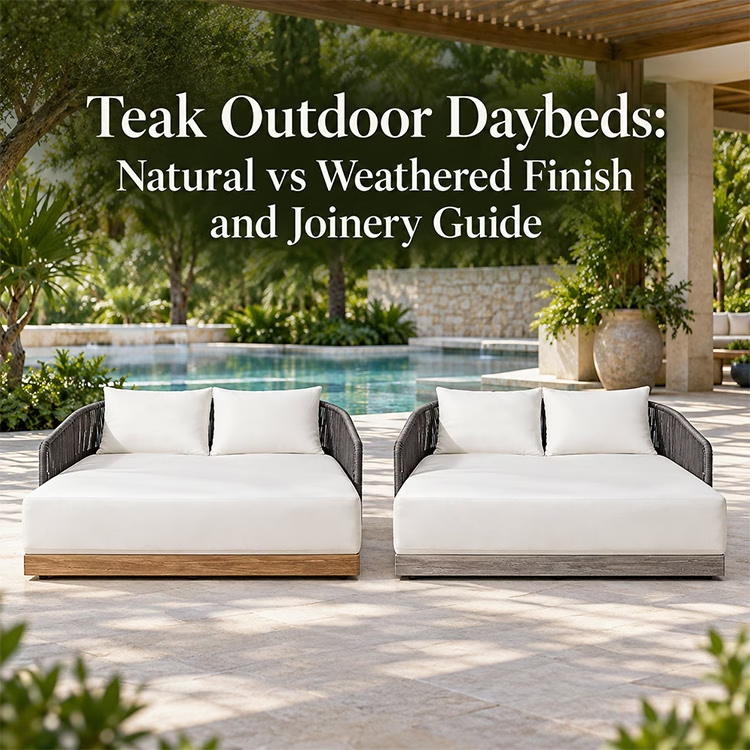
Teak Outdoor Daybeds: Natural vs Weathered Finish and Joinery Guide
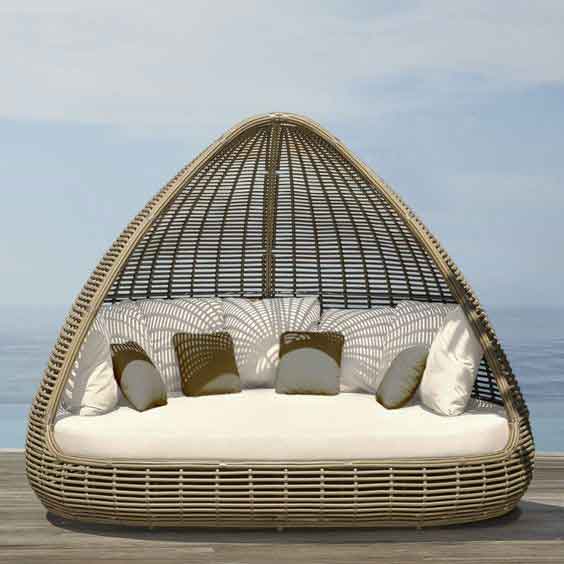
A teak daybed reads differently than a round rattan one. It’s less about a design statement and more about a quieter, more grounded piece, the kind that shows up outside a spa treatment room, along a garden path, or in a resort courtyard where the whole point is to slow down rather than draw attention. We’ve already covered round canopy daybeds built for pool decks. This one’s about the teak-and-weave style, where the frame material itself does most of the work, and where a couple of decisions upfront (finish, joinery, weave pairing) determine how the piece looks in five years, not just on delivery day.
Natural Teak vs. Weathered Teak: Pick One on Purpose
This is the first real decision, and a lot of buyers don’t realize it’s a decision at all until the piece has already started changing color outdoors. Natural, untreated teak starts a warm honey-brown and slowly turns silvery gray as it’s exposed to sun and rain. Left alone, that’s not deterioration. It’s just teak doing what teak does, and plenty of properties actually want that weathered look on purpose, especially for a garden or coastal setting where the silvered tone reads as intentional and aged-in rather than neglected.
Some manufacturers also offer a pre-weathered or multistep finished teak that arrives already looking aged, so the piece matches older teak furniture already on a property without waiting years for a newer piece to catch up in tone. Either way, this is worth deciding before an order goes out, not after. Mixing a batch of natural teak that hasn’t started graying yet with older, already-silvered pieces from a previous order creates a mismatched look that takes a while to even out on its own.
If a property wants to keep that original honey tone instead of letting it silver, regular oiling is the trade-off, typically once or twice a year. Skipping it doesn’t damage the wood. It just means the color shifts on its own timeline instead of staying put.
Joinery: The Part That Determines Whether It Holds Together
Teak’s reputation for durability outdoors is real, but it depends heavily on how the frame is actually joined. Mortise-and-tenon construction, where one piece of wood fits into a matching cut slot in another, remains the strongest method for outdoor furniture that has to handle repeated weight and movement without loosening. It’s more labor-intensive to produce than simply screwing pieces together, which is exactly why cheaper daybeds skip it.
Ask directly how a frame is joined before ordering at any real volume. A piece that looks identical to a mortise-and-tenon frame in a photo can be held together with much simpler hardware underneath, and that difference shows up as creaking or loosening within a year or two of daily hospitality use, well before the wood itself would ever show wear.
Wood Frame, Woven Seatback: A Hybrid Worth Understanding
A lot of teak daybeds aren’t solid wood all the way through. The structural frame, the part carrying weight and holding the joinery, is often teak, while the seatback or side panels use an all-weather woven material for texture and a lighter visual feel. This hybrid approach does two things well: it keeps the daybed from looking like a heavy wooden box, and it lets the weave flex slightly where a guest leans back, which solid wood can’t do.
The same weave-quality questions from earlier guides apply here too. A UV-stabilized, evenly tensioned weave holds its color and shape for years. A thinner, untreated version fades and can loosen faster than the teak frame around it ages, which creates an odd effect where the wood still looks new while the weave already looks tired.
Cushion Depth and Placement
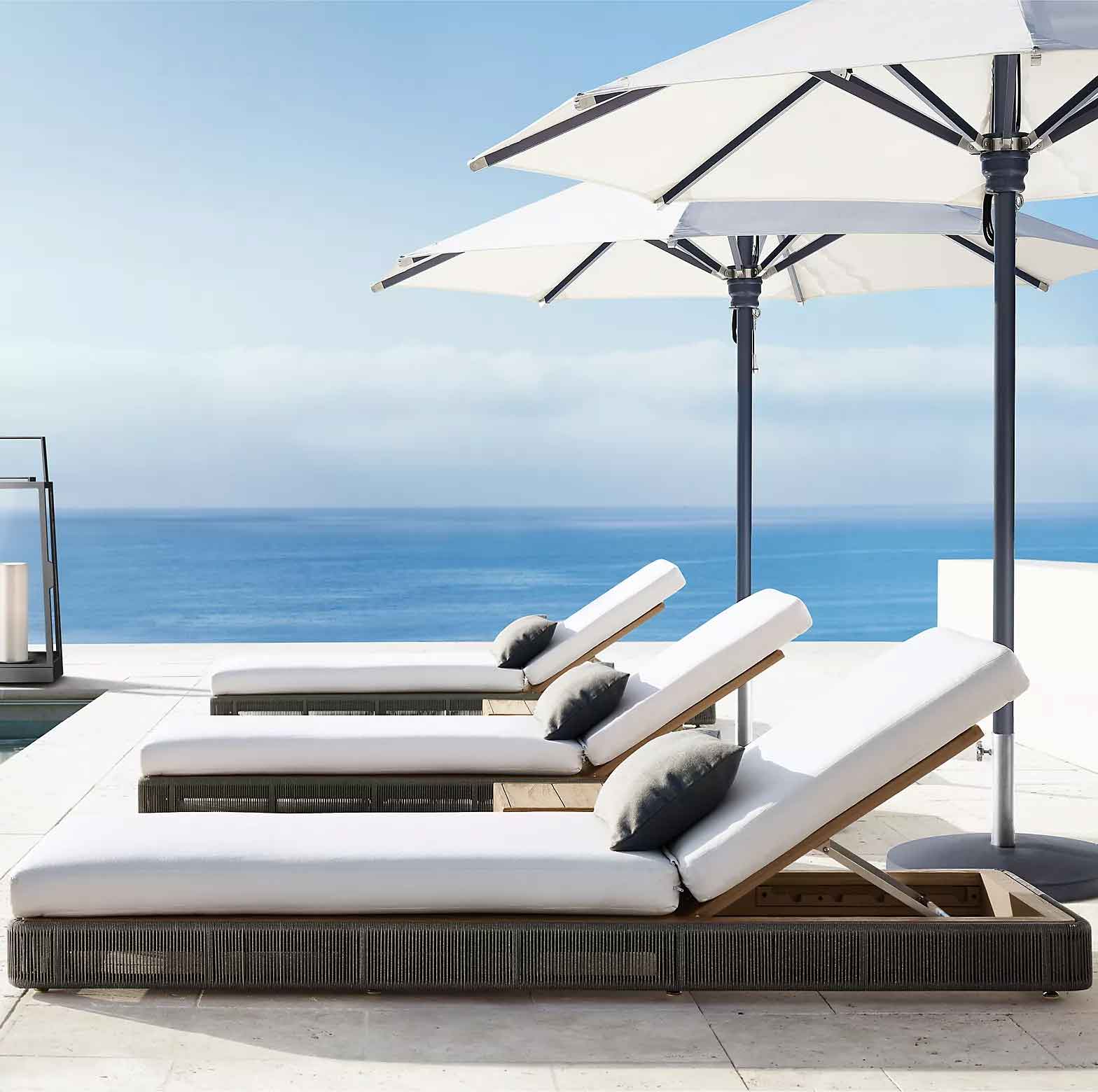
Daybeds ask more of a cushion than almost any other outdoor seating category, since guests lie down on them for extended stretches rather than just sitting. Quick-dry, open-cell foam with a mesh bottom panel matters even more here, since a daybed cushion holds a lot more surface area exposed to rain than a chair cushion does. Depth matters too. A shallow cushion on a wide daybed frame can feel more like a bench than a lounging surface, while genuinely substantial cushion depth changes how the whole piece functions for a guest actually planning to relax there for an hour.
Placement is worth thinking through before ordering, not after. A teak daybed near a spa or garden path usually sits in partial shade and sees less direct, constant sun than one on an open pool deck, which changes how quickly a natural finish will weather and how often cushions actually need to come in out of the rain.
Ordering for a Spa, Resort, or Villa Project
A homeowner buying a single teak daybed mostly cares about finish tone and how it fits an existing garden or patio setting. A resort or spa buyer ordering several units for a wellness area or private villa cluster has to think about matching finish and weave tone across every piece, especially if the daybeds sit close enough together for guests to compare them directly, and about whether a natural or pre-weathered finish is being specified consistently across the whole order.
Worth asking a manufacturer directly about their joinery method, whether a pre-weathered finish is available to match existing property furniture, and their minimum order quantity for a matched batch.
Frequently Asked Questions
Should I choose natural or pre-weathered teak for an outdoor daybed? It depends on the setting and whether the property already has older, silvered teak furniture nearby. Natural teak starts honey-brown and grays over years; pre-weathered teak arrives already toned to match existing pieces without the wait.
What’s the strongest joinery method for a teak daybed frame? Mortise-and-tenon joinery, where pieces interlock rather than rely purely on screws or hardware, holds up best under repeated weight and movement. It’s more labor-intensive to produce, which is part of why it’s worth confirming directly with a manufacturer.
Why do some teak daybeds have woven sections instead of solid wood? The hybrid design keeps the piece visually lighter and adds some flex where a guest leans back, which solid wood doesn’t offer. The teak frame still carries the structural load; the weave is a surface and comfort treatment layered onto it.
Does teak need oiling if I want to keep its original color? Yes, typically once or twice a year. Skipping it isn’t harmful to the wood, but the daybed will weather naturally to a silver-gray tone over time instead of holding its honey-brown color.
Can teak daybed finish be matched across a resort or spa’s existing furniture? Most manufacturers building for hospitality projects, Feidao included, can offer natural or pre-weathered finish options to match a property’s existing teak pieces. Worth confirming directly before placing a batch order.
Where This Fits at Feidao Furniture
Foshan Feidao Furniture Co., Ltd. has manufactured outdoor furniture since 2009, running an office, factory, and exhibition hall covering more than 6,000 square meters. The Outdoor Teak Daybed reflects the points above, pairing a solid teak frame with all-weather woven seatback sections and substantial quick-dry cushions. Browse the full Teak Daybed range or the broader Daybed category to compare models, or contact Feidao directly for a finish match or hospitality-scale quote.
Welcome to follow our Instagram and TikTok.
Or contact us directly.
Want to read another article? Please click this: Outdoor Dining Sets for Restaurants and Resorts