
Coastal Hotel Outdoor Furniture: Salt, Sun and Wind Guide
A beachfront deck is the hardest place to put furniture. Inland, a good outdoor set mostly has to cope with sun and rain. At the coast, it has to cope with salt in the air, stronger sun, steady wind, sand, and humidity that never really lets go. Furniture that looked great in the catalog can start spotting, fading, and loosening in a single season.
Most of that damage is predictable. Once you know what each force does, you can ask better questions and choose pieces that actually last. Here’s how each one works, and what to check on each part of a piece.
What Salt Air Actually Does
Salt is the new ingredient. It travels in the air and lands on everything, and it speeds up corrosion on metal far beyond what rain alone does.
Iron and steel are the worst fit for a coastal deck. They rust, and salt makes it faster. Aluminum doesn’t rust, which is why it’s the common choice, but it isn’t invincible. Salt can still pit bare aluminum and leave a chalky white film. A good powder coat is what protects it. So with aluminum, the coating quality matters more than the metal, and chips at welds and edges are where trouble starts.
Rinsing helps more than most people expect. Salt that sits on a surface keeps working. Regular fresh-water rinses are the cheapest maintenance you can do on a coastal property.
Hardware: The Small Parts That Fail First
Frames get the attention. Fasteners do the failing.
Screws, bolts, hinges, and chains live in the most exposed spots and can corrode long before the frame looks tired. Two things are worth asking about. What material are the fasteners? Stainless steel is a common choice outdoors, and higher grades are often preferred near the sea, but ask the factory what they actually use. And are different metals touching? When dissimilar metals sit together in a salty, wet place, one can corrode faster, so a steel bolt in an aluminum frame deserves a second look.
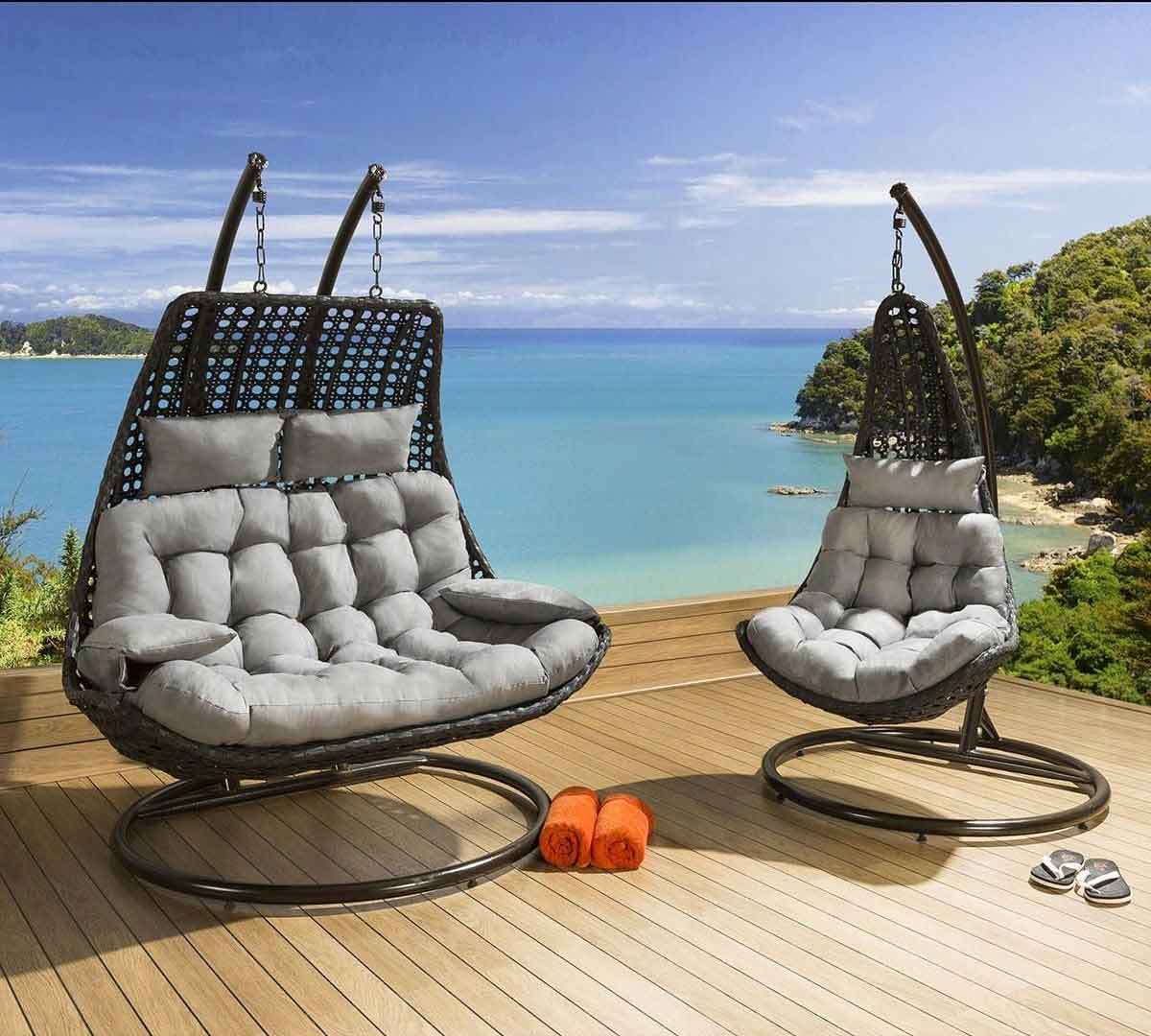
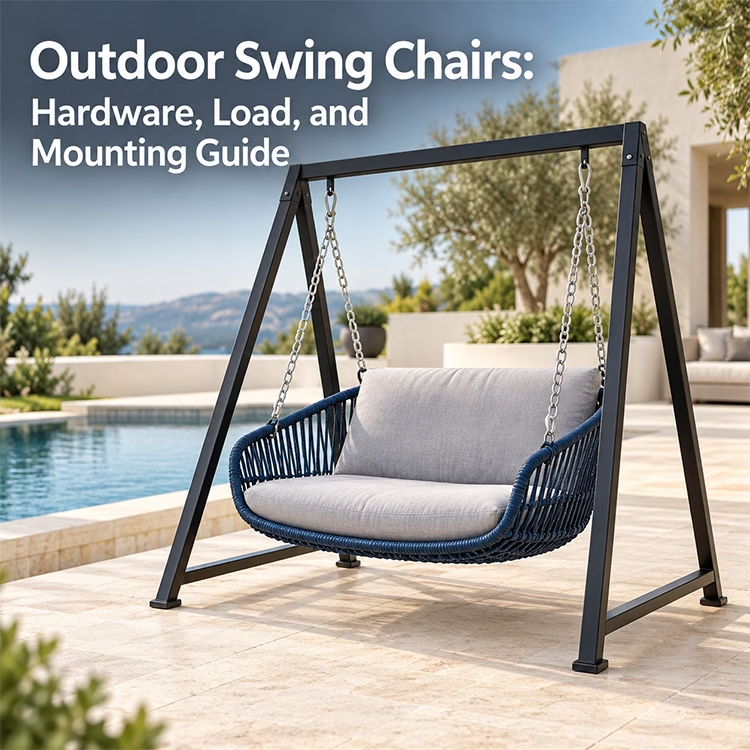
This applies hardest to anything that moves or carries load: recline hinges on loungers, base fittings on umbrellas, the chain and hook on a swing. If it bears weight and it’s near salt air, plan to inspect it each season.
Coating and Finish
Powder coating is the barrier between the metal and the salt, so it’s worth a closer look than a spec sheet line.
Ask how thick the coat is and how it’s cured. Thin or uneven coating chips at corners and welds first, and once the metal is exposed, corrosion starts underneath. Look at those spots on a sample. Edges and welds should be smooth and fully covered.
Color matters a little too. Dark finishes soak up heat and show salt residue; light ones show it less. It’s a small point, but on a sunny beach deck it affects how the furniture feels to the touch.
Teak, Weave and Fabric Near the Sea
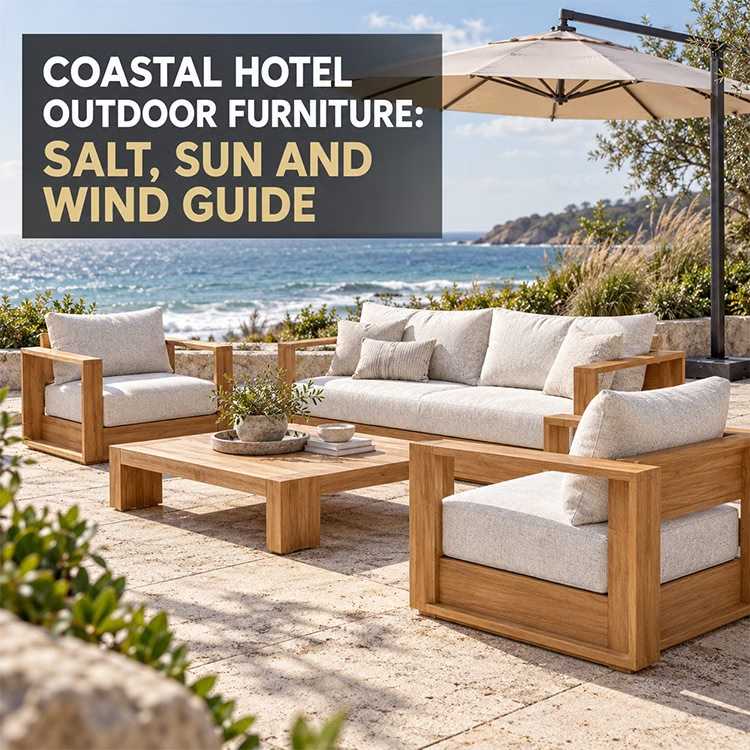
Teak does well at the coast. Its natural oils resist rot and insects, and it weathers to a silvery gray without falling apart. The joints still matter, since humidity swings can loosen poorly built ones. Teak is also heavy, which helps in wind and hurts when staff have to move it. Our Teak Sofa is built around that solid hardwood approach.
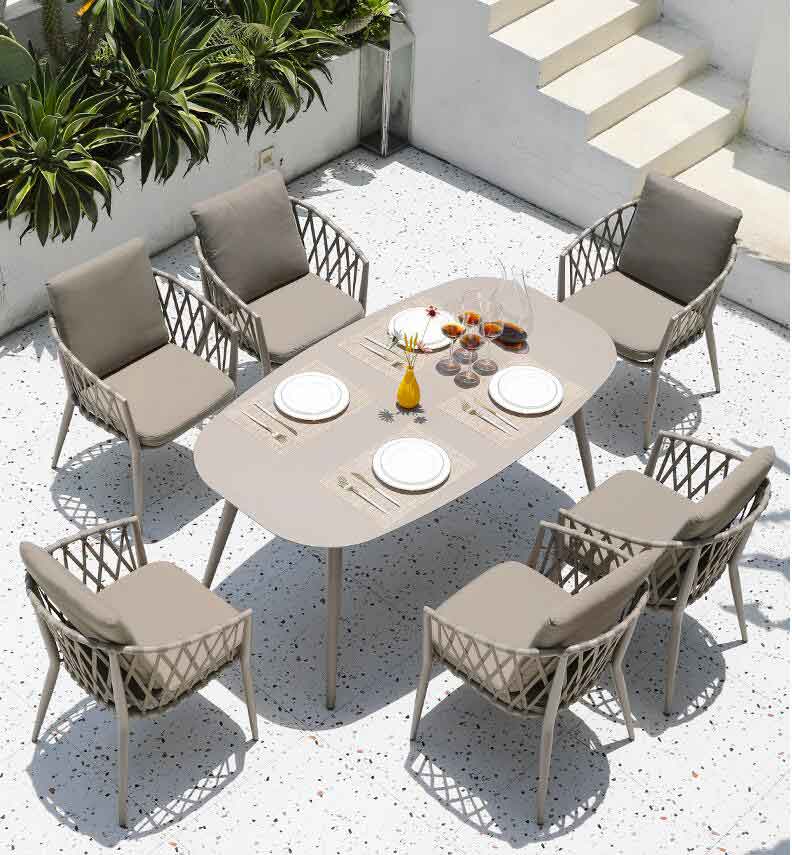
Synthetic weave over an aluminum frame is a common coastal answer. The weave has to be UV-stabilized, because coastal sun is strong and cheap cord fades and goes brittle quickly. Press on it in person if you can. It should feel taut and even.
For cushions and canopies, solution-dyed acrylic holds color far longer than printed or pigment-dyed fabric. Pair it with quick-dry foam, because humid air and sea spray keep cushions damp. Standard foam that stays wet will mildew.
Wind: The Force Everyone Underestimates
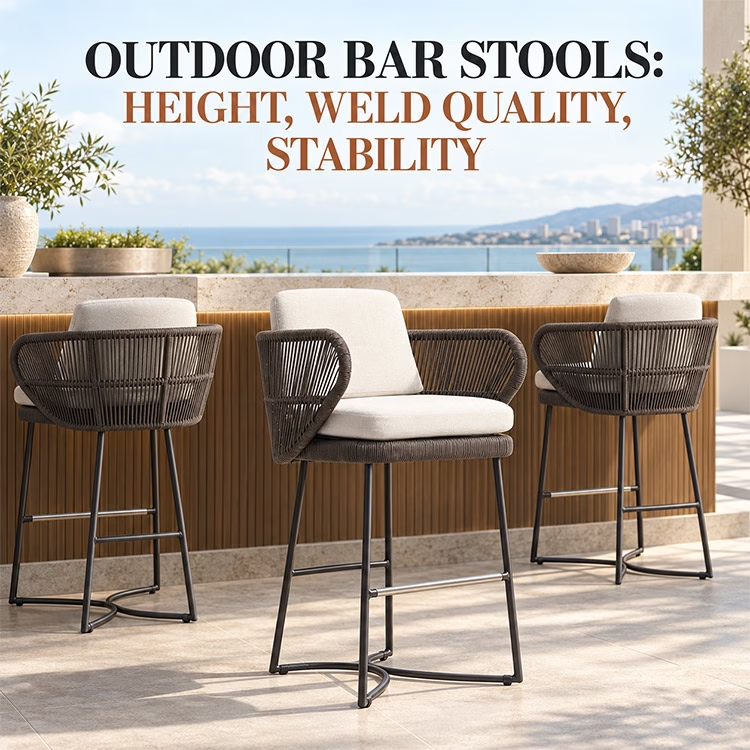
Beaches are windy, and lightweight furniture moves. A gust can flip an umbrella, slide a lounger, or topple a tall stool.
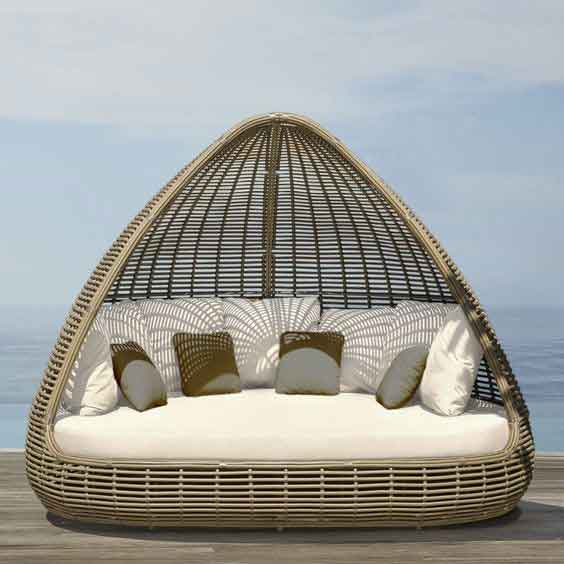
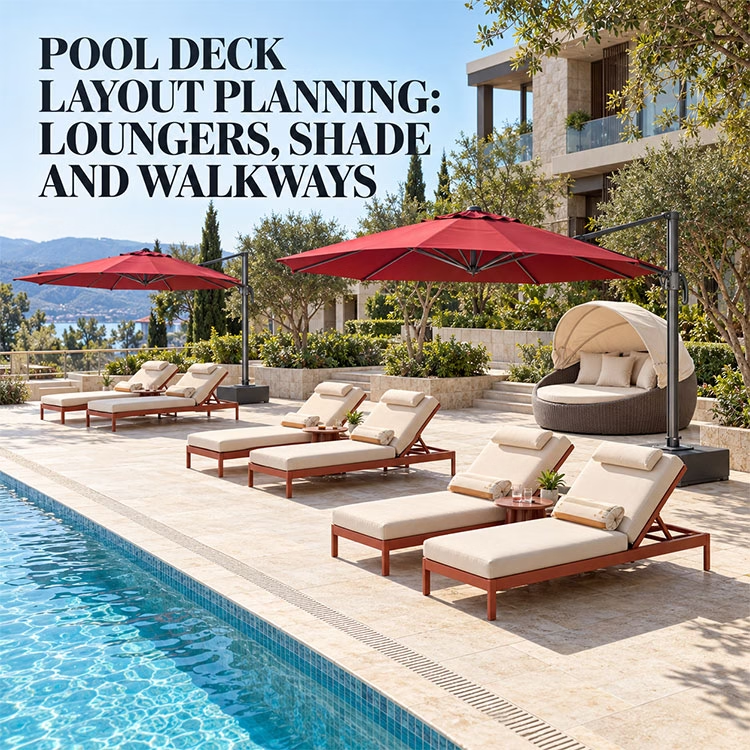
Umbrellas need heavy, stable bases and a routine for closing them when the wind picks up. A cantilever design like our Cantilever Umbrella can be tilted or folded easily, but the base still has to be matched to the exposure. Daybeds with canopies catch wind too. The Outdoor Round Daybed has a canopy that deserves a plan for stormy days.
Think about weight and stacking for the whole deck. Light, stackable pieces are easy to secure ahead of a storm. Heavy pieces stay put on their own. Whichever you choose, decide where everything goes before the season starts.
Sand, Humidity and Everyday Wear
Sand is abrasive. It scratches finishes and works into joints, hinges, and the weave. Rubber or plastic feet help, and so does a simple habit of brushing and rinsing.
Humidity keeps fabric and foam damp and invites mildew. Quick-dry foam, drainage in seat bases, and removable, washable covers all pay off here. If cushions can’t dry, they’ll smell.
A Practical Coastal Checklist
When you compare pieces, check these in order:
- Frame material and powder-coat quality, especially at welds and edges.
- Fastener and hardware material, and whether mixed metals touch.
- UV rating of the weave and fabric.
- Foam type and drainage for cushions.
- Base weight and wind plan for umbrellas, canopies, and tall pieces.
- A written care plan for staff: rinse schedule, inspections, storm storage.
Ordering for a Beachfront Property
A coastal hotel orders in volume, so ask the factory the questions up front. What coating process do you use, and can you show a sample? What fasteners and hardware? Can finishes and fabrics match across the whole order? What’s the packing like for sea shipping? And what do you suggest for the most exposed spots, such as the first row by the water?
It’s normal to specify differently by zone. The pieces closest to the surf can use the most protective choices, while sheltered lounge areas can use lighter ones.
Frequently Asked Questions
Is aluminum furniture good for beachfront properties? Yes, it’s a common choice because it doesn’t rust. It still needs a quality powder coat, since salt can pit bare aluminum, and chips at welds and edges are where problems begin.
Why does outdoor furniture fail faster at the coast? Salt in the air accelerates corrosion, UV is stronger, wind moves lightweight pieces, and humidity keeps fabric damp. Each one wears a different part of the furniture.
Does teak hold up near the ocean? Teak resists rot and insects well and weathers to a silvery gray. Good joinery matters because humidity swings can loosen weak joints.
How often should coastal furniture be rinsed? Regular freshwater rinses remove salt before it keeps working on the surface. Many properties build it into a weekly or similar routine, adjusted to exposure.
What hardware should I ask about? Ask what material the screws, bolts, hinges, and chains are made from, and whether different metals touch. Inspect anything that carries load each season.
Where This Fits at Feidao Furniture
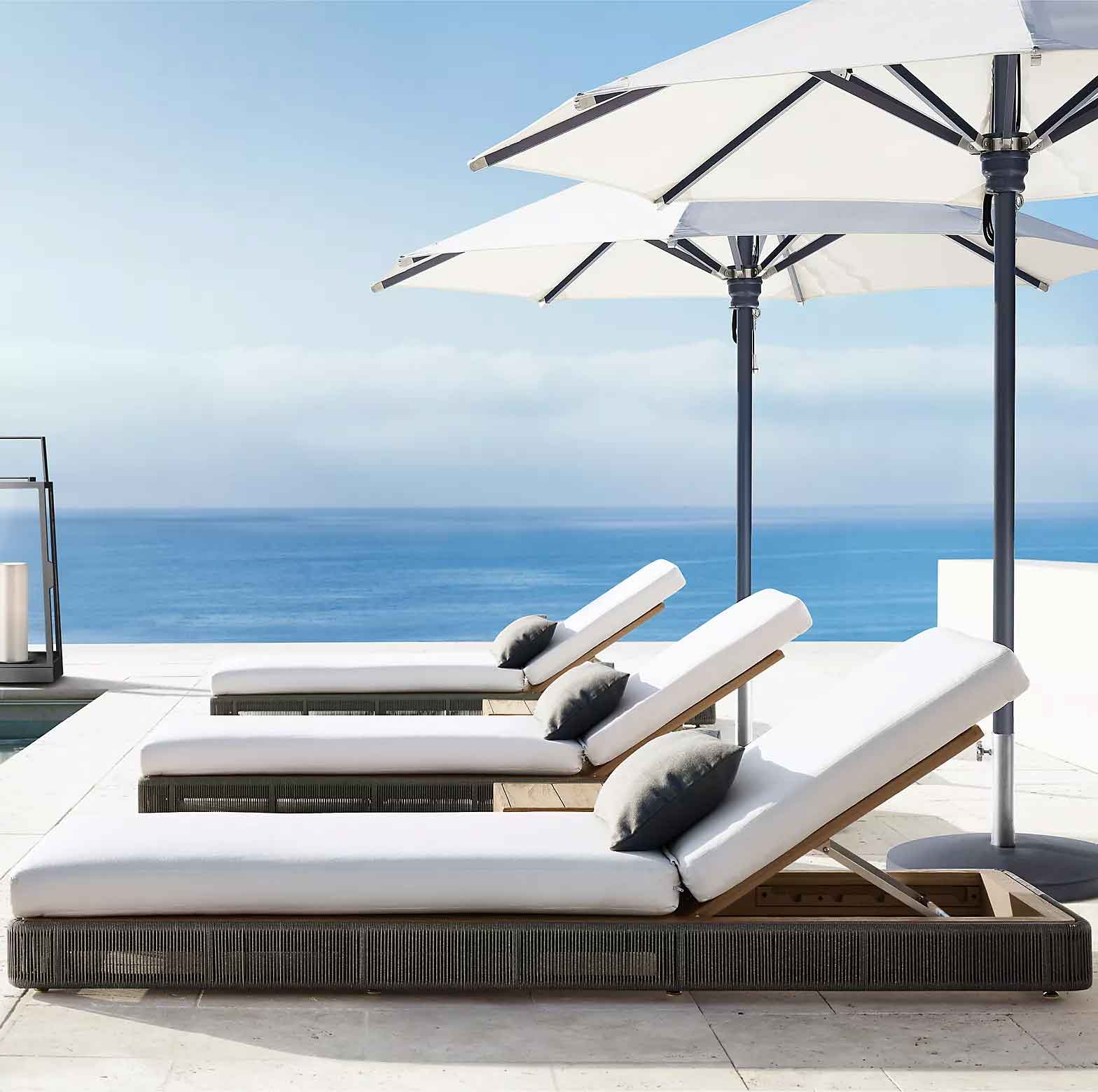
Foshan Feidao Furniture Co., Ltd. has made outdoor furniture since 2009. The office, factory, and exhibition hall cover more than 6,000 square meters, and the range includes aluminum, teak, and woven designs for resort and hotel projects. Start by browsing the Full Aluminum Sun Lounger range or the Shades range. For a beachfront project, contact Feidao with your location and exposure, and ask about coating, hardware, and finish options for each zone.
Welcome to follow us on Instagram and TikTok.
Or contact us directly.
Want to read another article? Please click this: Pool Deck Layout Planning: Loungers, Shade and Walkways