
Outdoor Cushion Fabric Guide: Acrylic, Polyester, Foam
Frames last. Cushions don’t. Ask any hotel’s facilities team which part of an outdoor set they replace first, and the answer is almost always the cushion. It fades, it goes flat, it smells, or a seam splits. And since a cushion is also the part a guest actually touches, it’s the part they judge the furniture by.
The good news is that cushion failure is mostly avoidable. A cushion is really four things: the fabric, the foam, the thread, and the zipper. Get each one right and the whole thing lasts years. Here’s what to look at, and what to ask.
Fabric: Where the Color Lives
The single biggest question about a cushion fabric is how it got its color.
Solution-dyed acrylic. The pigment is mixed into the material before the fiber is even made, so the color runs all the way through each strand. Sun can’t bleach what isn’t sitting on the surface. That’s why solution-dyed acrylic is the usual pick for hospitality, where cushions sit in direct sun for years. It also feels soft, closer to an indoor fabric than a plastic one.
Printed or piece-dyed polyester. Here the color is applied to the surface of the finished fabric. It costs less, and it can look great on day one. In strong sun, it fades faster, and the fade is often uneven, which is what makes an old cushion look tired.
Other options. Solution-dyed polyester exists too, so don’t assume polyester always means cheap. Olefin (polypropylene) is another solution-dyed choice with good mildew and stain resistance, though it can feel less soft. The takeaway: ask how the color is applied, not just what the fiber is.
Water, Stains, and Mildew
Outdoor fabrics are usually treated or woven to shed water and resist stains. Treatments help, but they wear, so it’s worth asking whether the resistance is built into the fabric or applied afterward.
One thing people get wrong: mildew-resistant isn’t mildew-proof. Mildew grows on dirt and moisture, even on resistant fabric. A cushion that stays damp and dirty can still go musty. So drying and cleaning habits matter as much as the fabric choice.
Foam: The Hidden Half of the Cushion
The fabric gets the attention. The foam does the work.
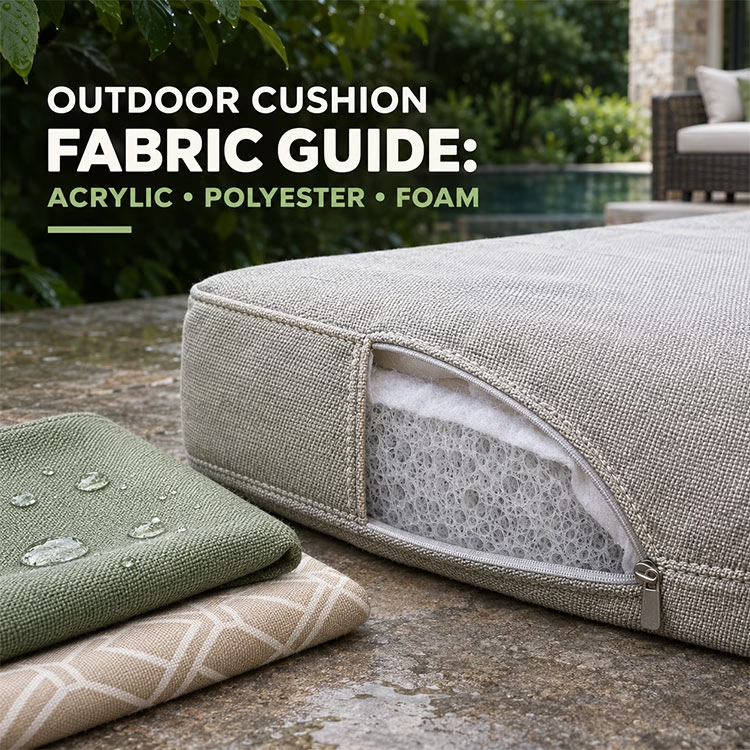
Standard upholstery foam soaks up water like a sponge and takes a long time to dry. In a humid or rainy place, that means mildew and a bad smell within days. For outdoor use, ask for quick-dry, open-cell foam, which lets water drain through instead of holding it. A mesh or vented base helps the water leave.
Density matters for comfort and lifespan. A cushion that feels great in the showroom can compress flat in a season if the core is soft. Ask about foam density, and press a sample firmly. It should push back and recover.
Wrapping matters too. A layer of polyester batting around the foam gives a softer, rounder edge and helps the cover keep its shape. Our Counter Height Stool is a good example of the fast-drying approach, with a UV- and stain-resistant seat and back.
Thread: The Part Nobody Checks
This is the one that surprises people. A fabric can be rated for years of sun, and the seams can still fail in one summer if the thread isn’t up to it. Ordinary thread breaks down in UV, and then the cushion starts splitting along its seams while the fabric looks fine.
Ask whether the cover is sewn with UV-resistant thread. It’s a small question with a big payoff, and a good manufacturer will have an answer ready.
Zippers and Closures
Metal zippers can corrode, especially near the coast. Plastic or coated zippers hold up better in wet, salty air. Check that the zipper runs smoothly and is covered or protected so it doesn’t catch on skin or clothing.
Removable covers are worth having in a hotel. A stained or worn cover can be taken off, washed, or replaced without buying a whole new cushion. It’s a real saving across a large fleet.
Fabric Tests and Ratings
Reputable fabric suppliers can give you test results for lightfastness (how well color resists sun), abrasion (how well it handles wear), and water resistance. You don’t need to be a textile engineer. Just ask for the data, and compare it between suppliers. If a manufacturer can’t tell you anything beyond “outdoor fabric,” keep asking.
Matching Cushions to the Piece
Different furniture asks different things of a cushion.
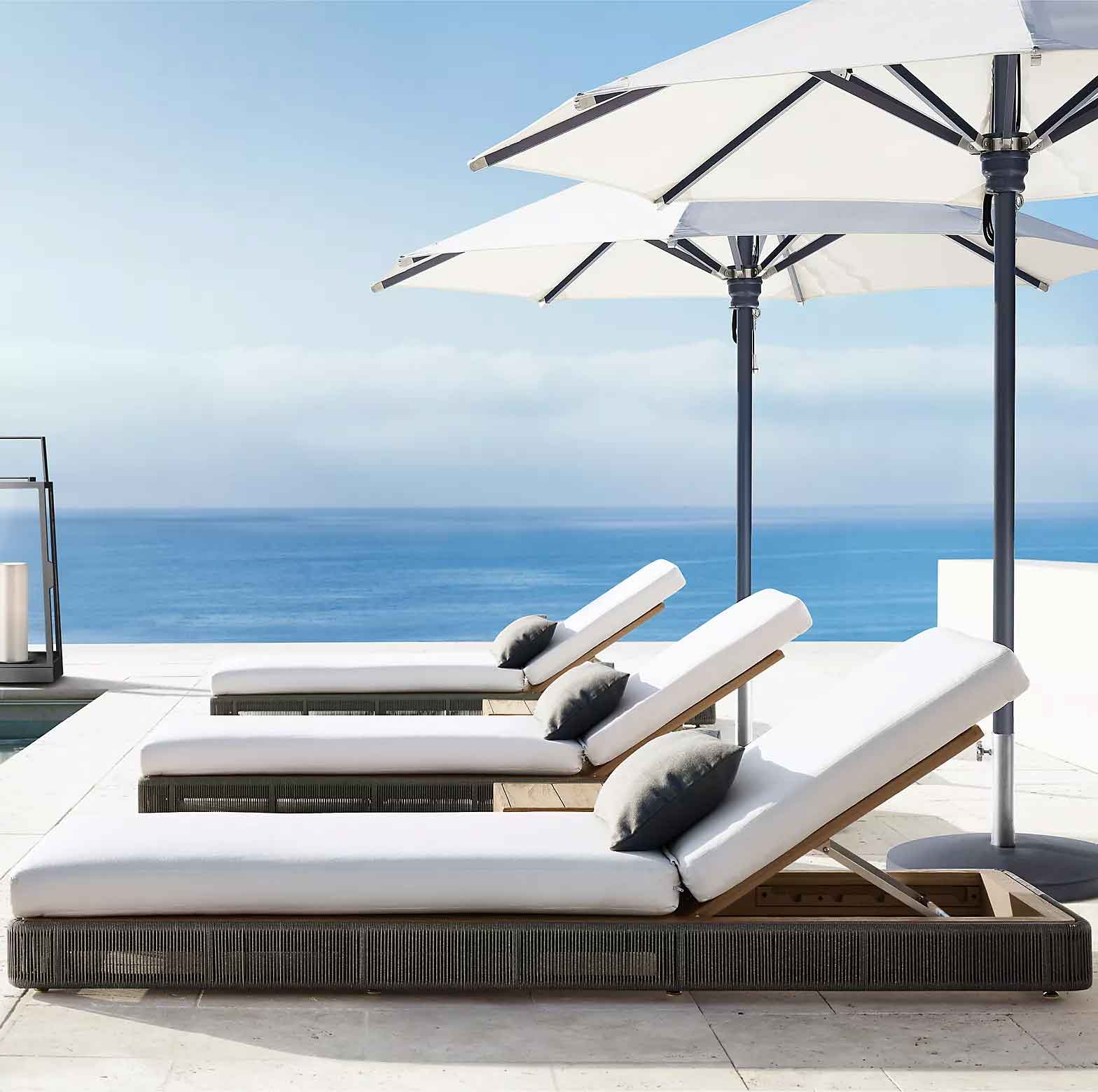
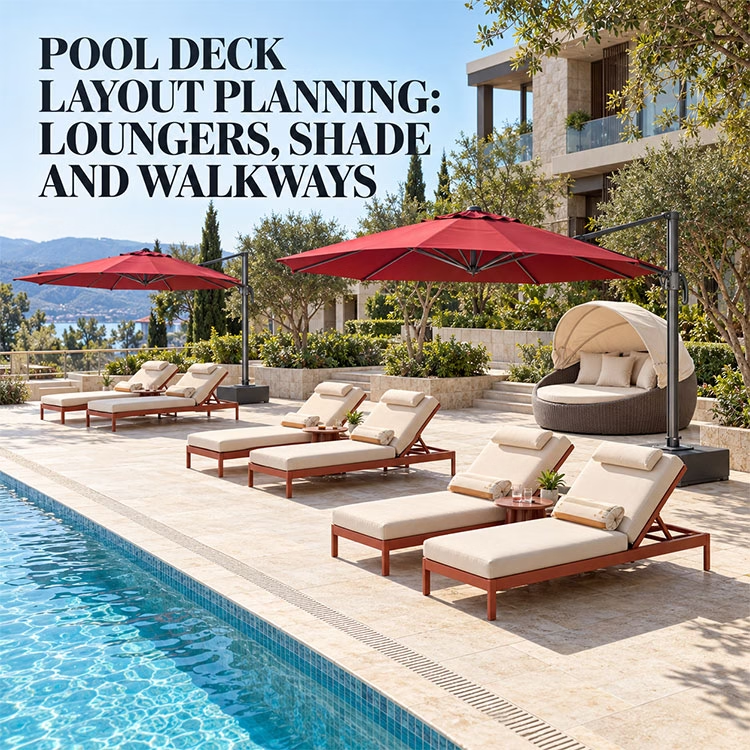
A sun lounger cushion is long, lies flat, and takes the full sun, so UV performance and drying speed matter most. The Full Aluminum Sun Lounger is paired with a thick cushion for that reason. Browse the Sun Lounger range to compare.
A sofa cushion is deeper and gets constant sitting and shifting, so foam density and shape retention matter. Look at the Full Aluminum Sofa range.
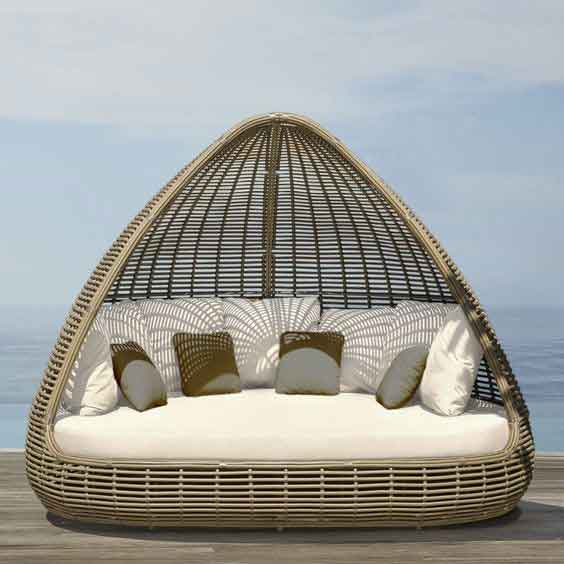
A daybed cushion is large and used for lying down for long stretches, so thickness and drainage both count. See the Daybed range.
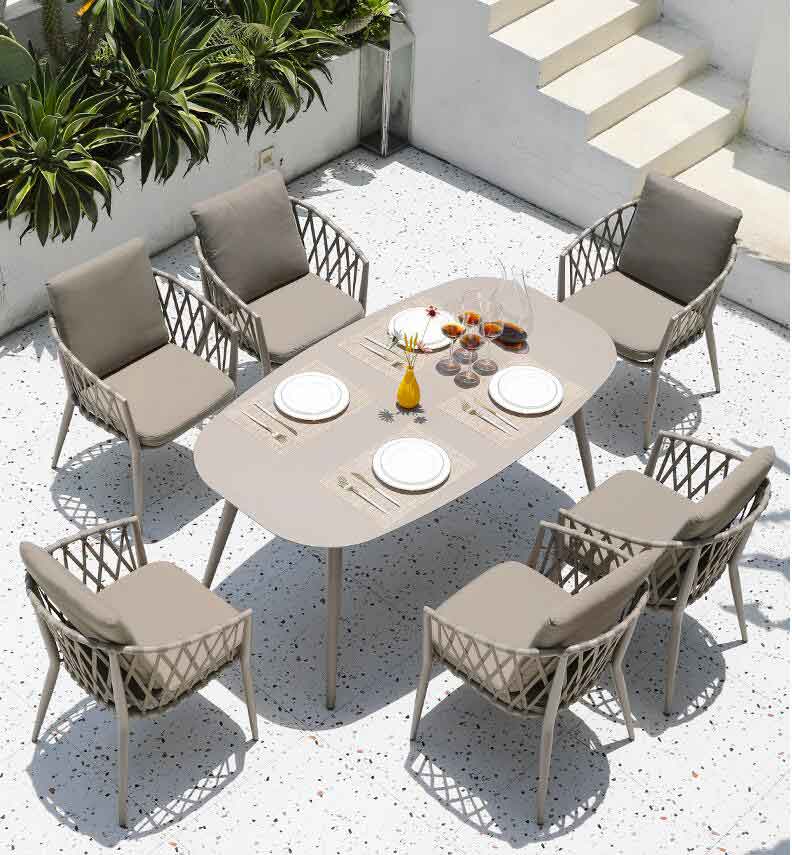
A dining chair cushion takes spills and constant contact, so stain resistance and easy cleaning matter most. See the Dining Set range.
Care That Makes Cushions Last
Brush off dirt and sand before it grinds in. Clean spills quickly with mild soap and water, and follow the care label for the fabric. Let cushions dry fully before storing them. During long off-seasons or heavy storms, bring them inside or cover them.
A simple care card for housekeeping, one page, prevents most avoidable damage.
What to Ask Before You Order
- How is the fabric colored: solution-dyed or surface-printed?
- What foam is inside, and is it quick-dry and open-cell?
- What’s the foam density?
- Is the cover sewn with UV-resistant thread?
- What are the zippers made of, and are covers removable and washable?
- Can you share test data for lightfastness and abrasion?
- Can fabric color be matched across the full order?
Frequently Asked Questions
What’s the best fabric for outdoor cushions? Solution-dyed acrylic is a popular choice for hospitality because its color runs through the fiber and resists sun fading. Solution-dyed polyester and olefin are also good options, depending on budget and feel.
Why do outdoor cushions get moldy? Mildew grows on moisture and dirt. Standard foam holds water, so it stays damp. Quick-dry foam, ventilated bases, and regular cleaning reduce the problem.
What’s quick-dry foam? It’s open-cell foam that lets water drain through instead of absorbing it, so cushions dry much faster after rain than standard upholstery foam.
Do removable covers matter for hotels? Yes. Removable, washable covers let staff clean or replace a worn cover without buying a full new cushion, which saves money across a large fleet.
Can cushion fabric be customized for a hotel order? Most manufacturers serving hospitality projects, Feidao included, can offer fabric color options and match them across a full batch. Confirm the options, minimum order quantity, and lead time before ordering.
Where This Fits at Feidao Furniture
Foshan Feidao Furniture Co., Ltd. has made outdoor furniture since 2009. The office, factory, and exhibition hall cover more than 6,000 square meters, and the range includes sofas, loungers, daybeds, and dining sets with cushions built for outdoor use. For a hotel or resort order, contact Feidao to ask about fabric, foam, and color options for your project.
Welcome to follow us on Instagram and TikTok.
Or contact us directly.
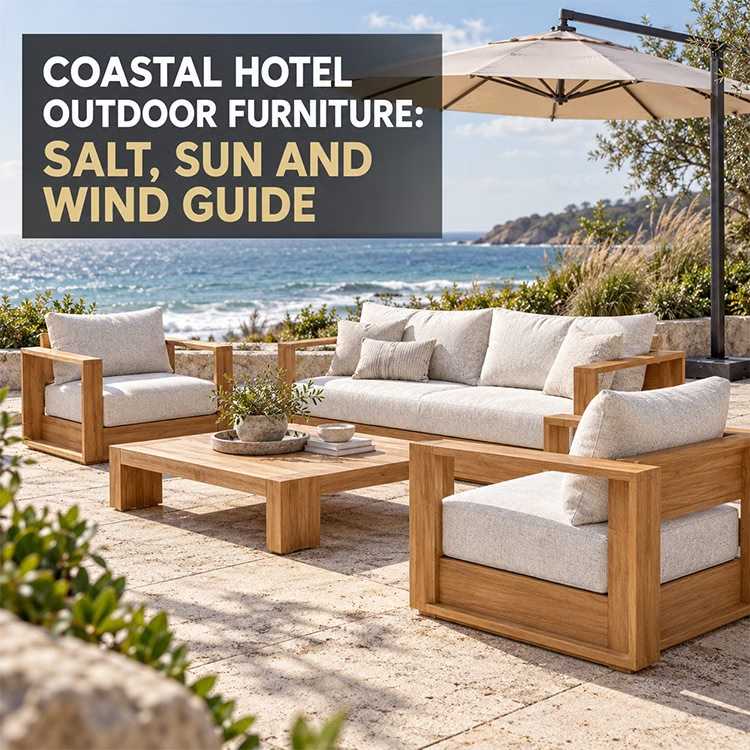
Want to read another article? Please click this: Coastal Hotel Outdoor Furniture: Salt, Sun and Wind Guide