
Outdoor Furniture for Spa and Wellness Areas
A spa guest isn’t a pool guest. They arrive slowly, often in a robe, sometimes with wet hair and oiled skin. They’re there to do nothing well. Everything about the space is meant to lower their pulse, and the furniture is part of that, whether it’s noticed or not.
That changes what you should look for. A lounger that works fine by the pool can feel wrong in a quiet courtyard: too bright, too loud when it moves, too hot to sit on, too awkward to climb out of. This guide covers the pieces that suit a wellness area, and the practical details that decide whether they keep feeling calm after a year of daily use.

What a Wellness Area Asks of Furniture
Think about what the guest experiences, in order.
They sit or lie down, often barefoot or in a robe. They stay a long time. They want quiet, privacy, and soft surroundings. They may be wet or have oil on their skin. And afterward, a staff member has to reset the space fast, without making a racket, before the next guest.
So the list is short and a little different: comfort for long stays, materials that feel good against skin, low noise, easy cleaning, and a layout that gives each guest a sense of being alone.
Daybeds: The Anchor Piece
A daybed is the signature of a relaxation area. It’s big enough to stretch out on, it feels like a private room, and it photographs beautifully.
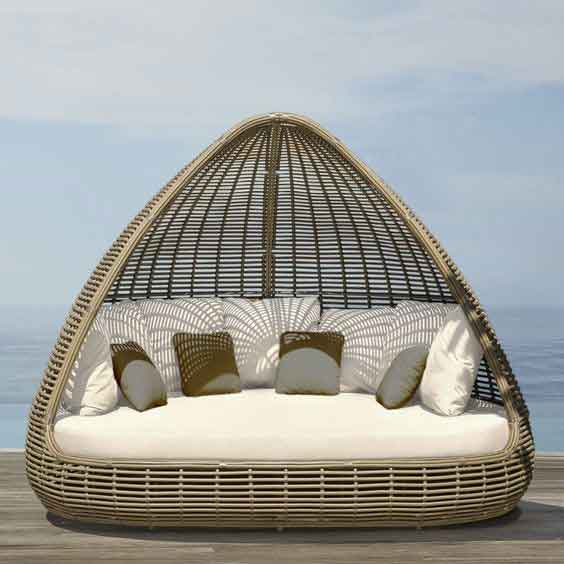
Teak suits this setting well. It has a warm, natural look that fits a calm space, and it tends to feel less hot than dark metal in direct sun. Our Outdoor Teak Daybed pairs a solid teak frame with woven seatback sections, which keeps the piece from looking heavy. For a more sculptural statement, the Outdoor Round Daybed has a canopy that adds shade and a sense of enclosure.
Give daybeds room. They work because they feel set apart. Crowd them and you lose the point.
Loungers: Flexibility for Individual Guests
Loungers suit guests who want to sit up, read, or change position. They also let you serve more people in the same area.
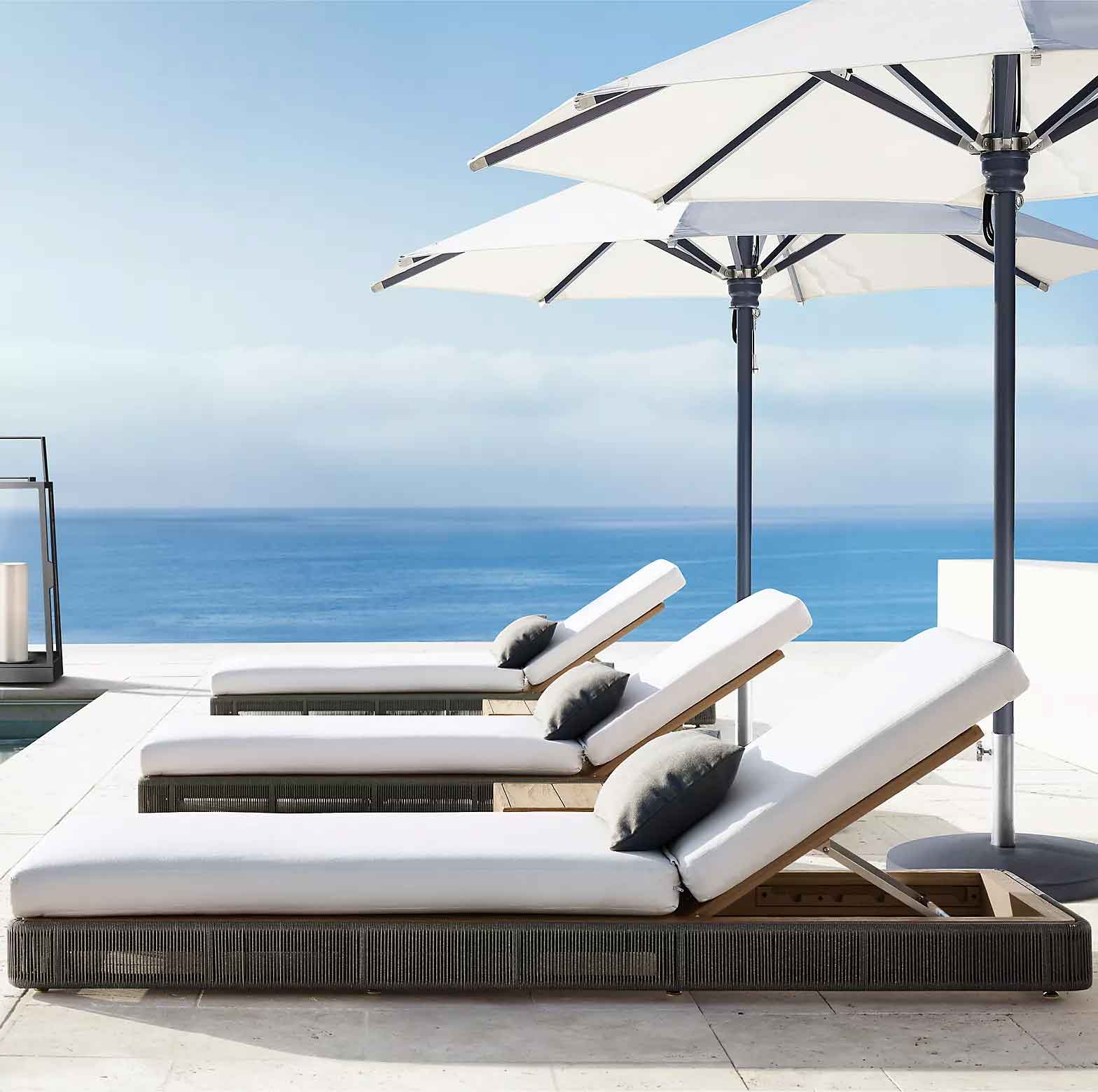
For a wellness setting, look for adjustable backs that hold their positions without slipping, and cushions thick enough for a long stay. Frames should feel stable when a guest lowers themselves down, because a wobble breaks the calm instantly. Quiet matters too: felt or rubber feet, and smooth hinges, mean a lounger can be adjusted without a metallic click. Our Full Aluminum Sun Lounger uses an aluminum frame and a thick cushion. You can compare more frame types in the Sun Lounger range.
Swings: A Gentle Signature
A swing adds movement to a stillness-focused space. A slow sway is soothing, and a swing in a quiet corner becomes a favorite spot.
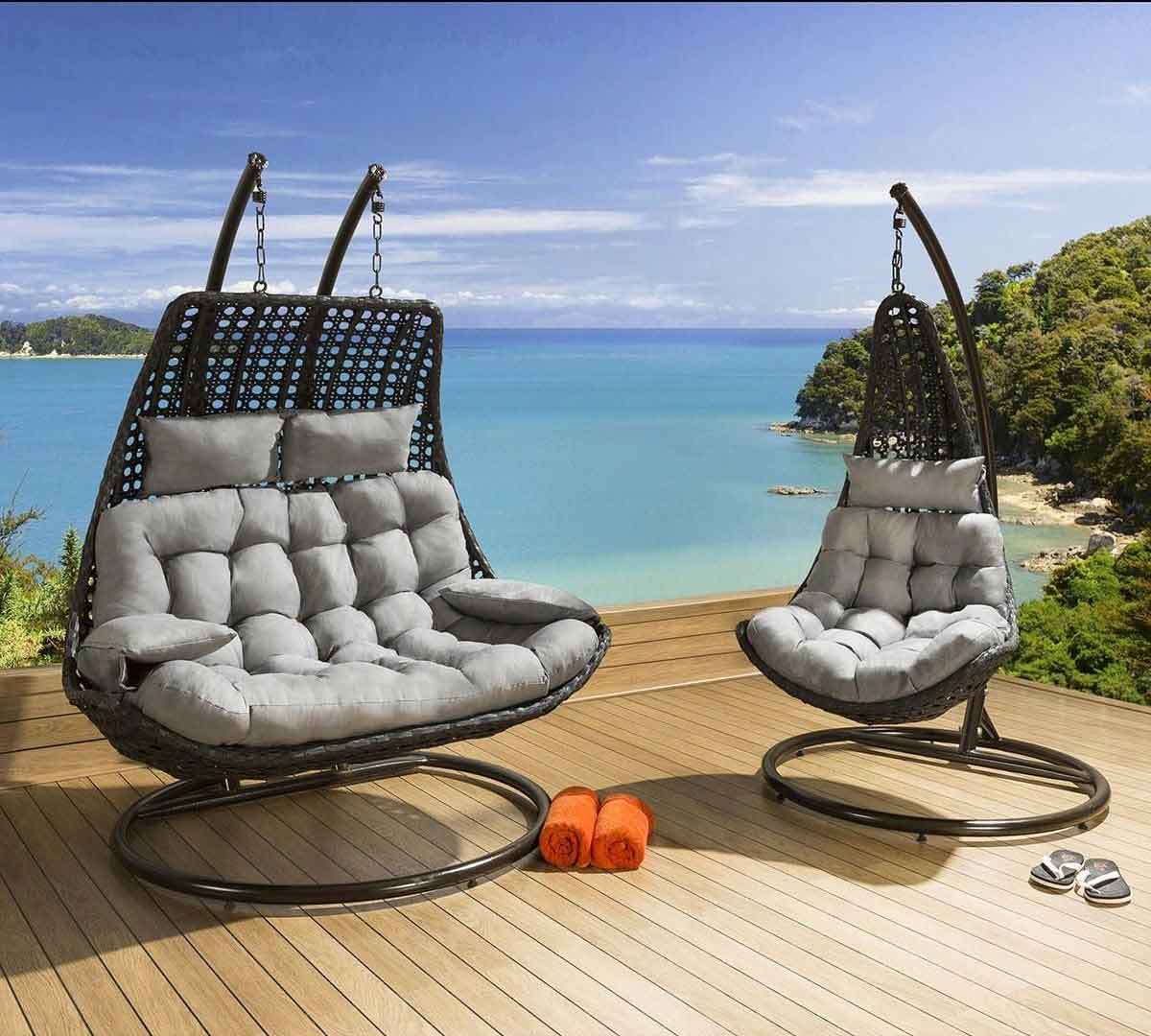
Safety comes first, though. A swing hangs from something, so the mounting hardware and the structure above it matter more than the cushion. Our Couple Swing is handwoven over an aluminum frame with a galvanized chain and hook, and the mounting hardware isn’t included, so plan that part with your installer. Check the hook and chain regularly. In a wet area, check for corrosion more often.
Materials That Feel Right Against Skin
Guests touch the furniture with bare arms, legs, and backs, so texture and temperature matter.
Dark metal can get hot in sun. Teak and light-colored finishes are kinder to skin. Smooth, rounded edges avoid scrapes and snagging on robes. A well-made weave should be tight and even, without loose strands that catch. Cushion fabric should feel soft and handle repeated cleaning.
Check samples with your hands, not just your eyes. If a piece looks calm but feels harsh, guests will notice.
Wet Feet, Oils, and Sunscreen
A wellness area has its own kinds of mess.
Wet feet and splashes make surfaces slippery, so keep paths and the areas around loungers well planned, and think about where guests step in and out. Body oils and sunscreen can stain cushions, so stain-resistant fabric and removable, washable covers pay off. Many properties lay a towel over every cushion, which helps, but the cushion beneath still needs to take cleaning.
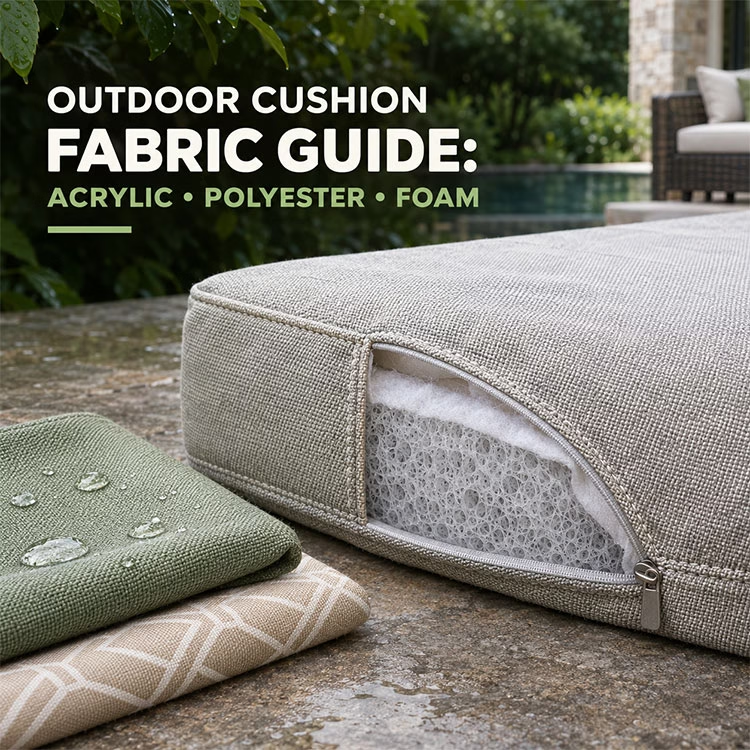
Quick-dry foam and drainage matter for the same reason as everywhere else outdoors: damp cushions smell. In a space meant to feel clean and fresh, that’s a real problem. For fabric and foam details, we’ve written a separate guide to outdoor cushion materials.
Privacy and Layout
Wellness guests want to feel unobserved. You can create that without walls.
Space pieces so guests aren’t facing each other directly. Use planters, screens, or hedges to break sightlines. Angle daybeds and loungers toward the view or toward a quiet focal point instead of toward each other. Provide shade so guests can rest without squinting. And keep service paths separate from relaxing areas, so staff can reach everything without walking through someone’s afternoon.
Check local rules for pool and water edges and for accessibility, and make sure guests can get up easily. Lower pieces can be harder to leave, especially for older guests, so test seat height and arm support.
Quiet by Design
Noise breaks the mood. Stacking chairs that clank, hinges that squeak, and feet that scrape on stone all do it.
Choose furniture with quiet hinges and felt or rubber feet, and make sure staff can reposition pieces without dragging. If a cleaning routine involves moving heavy furniture, plan it for off-hours.
Cleaning Between Guests
In a wellness area, cleanliness is part of the product. Furniture should wipe down fast and dry fast. Smooth surfaces, removable covers, and fabrics that handle frequent washing make that easier. Decide who owns the reset routine and how long it takes. If it takes too long, the area will be unavailable more often than you’d like.
Ordering for a Resort Spa
A single daybed for a home is a design choice. A resort spa ordering a dozen pieces needs consistency across units, matching finishes and cushions, and a supply of spare covers. Ask a manufacturer about minimum order quantity, finish matching across a batch, cover availability, and packing for container shipping. Also ask about hardware for swings and how often it should be inspected.
Frequently Asked Questions
What furniture works best in a spa relaxation area? Daybeds, adjustable loungers, and swings are common. Choose pieces with soft materials, stable frames, quiet movement, and cushions that handle long stays and frequent cleaning.
Is teak a good material for spa furniture? Teak has a warm, natural look and tends to feel less hot than dark metal in direct sun, which suits relaxation spaces. It needs regular care if you want to keep its color.
How do I protect cushions from oils and sunscreen? Use stain-resistant fabric, removable washable covers, and towels over cushions. Clean spills quickly and follow the care label.
Are swings safe for a wellness area? Yes, with proper mounting and regular inspection. Choose a rated chain and hook, confirm the structure above can carry the load, and check hardware often, especially in humid or wet areas.
Can furniture finishes be matched across a resort spa order? Most manufacturers serving hospitality projects, Feidao included, can match finishes and cushion fabric across a full batch. Confirm the options, minimum order quantity, and lead time before ordering.
Where This Fits at Feidao Furniture
Foshan Feidao Furniture Co., Ltd. has made outdoor furniture since 2009. The office, factory, and exhibition hall cover more than 6,000 square meters, and the range includes daybeds, loungers, swings, and shade pieces for resort projects. Browse the Daybed range to start, or contact Feidao with your spa layout and ask for a matching mix and quote.
Welcome to follow us on Instagram and TikTok.
Or contact us directly.
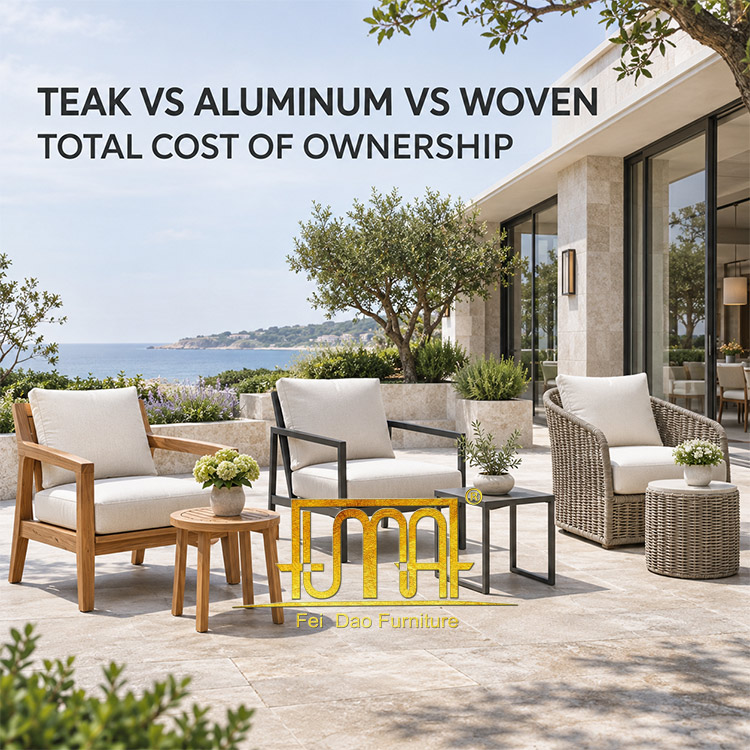
Want to read another article? Please click this: Teak vs Aluminum vs Woven: Total Cost of Ownership