

Outdoor Furniture Off-Season Storage and Care Guide
Most outdoor furniture doesn’t wear out in the busy season. It wears out in the quiet one. A set gets left wet under a tarp, a cushion goes into storage still damp, a chipped corner sits uncovered all winter, and by spring the damage is done.
The fix is simple, and it’s cheaper than replacing anything. Spend a few hours at the end of the season cleaning, drying, checking, and covering. This guide walks through it by material, then by the pieces hotels and resorts usually need to handle at scale. If your climate has a rainy or storm season instead of winter, the same steps apply.
First Rule: Clean It Before You Store It
Dirt, salt, sunscreen, and food residue all stay on a surface and keep working on it. Storing furniture dirty is how stains set and mildew starts.
Use mild soap, warm water, and a soft brush or cloth. Skip abrasive pads and harsh chemicals. Rinse well, because leftover soap attracts dirt. Then let everything dry completely. Not mostly dry. Fully dry. Trapped moisture is the number one cause of mildew in storage.
Aluminum Frames
Aluminum doesn’t rust, so cleaning is easy. The thing to look for is the coating.
Walk the frame and check every weld, edge, and corner for chips in the powder coat. Bare metal exposed to moisture is where corrosion starts, and it spreads under the coating. If you find a chip, clean it, dry it, and touch it up with matching paint. Ask the manufacturer whether touch-up paint is available for your finish, and keep some on hand.
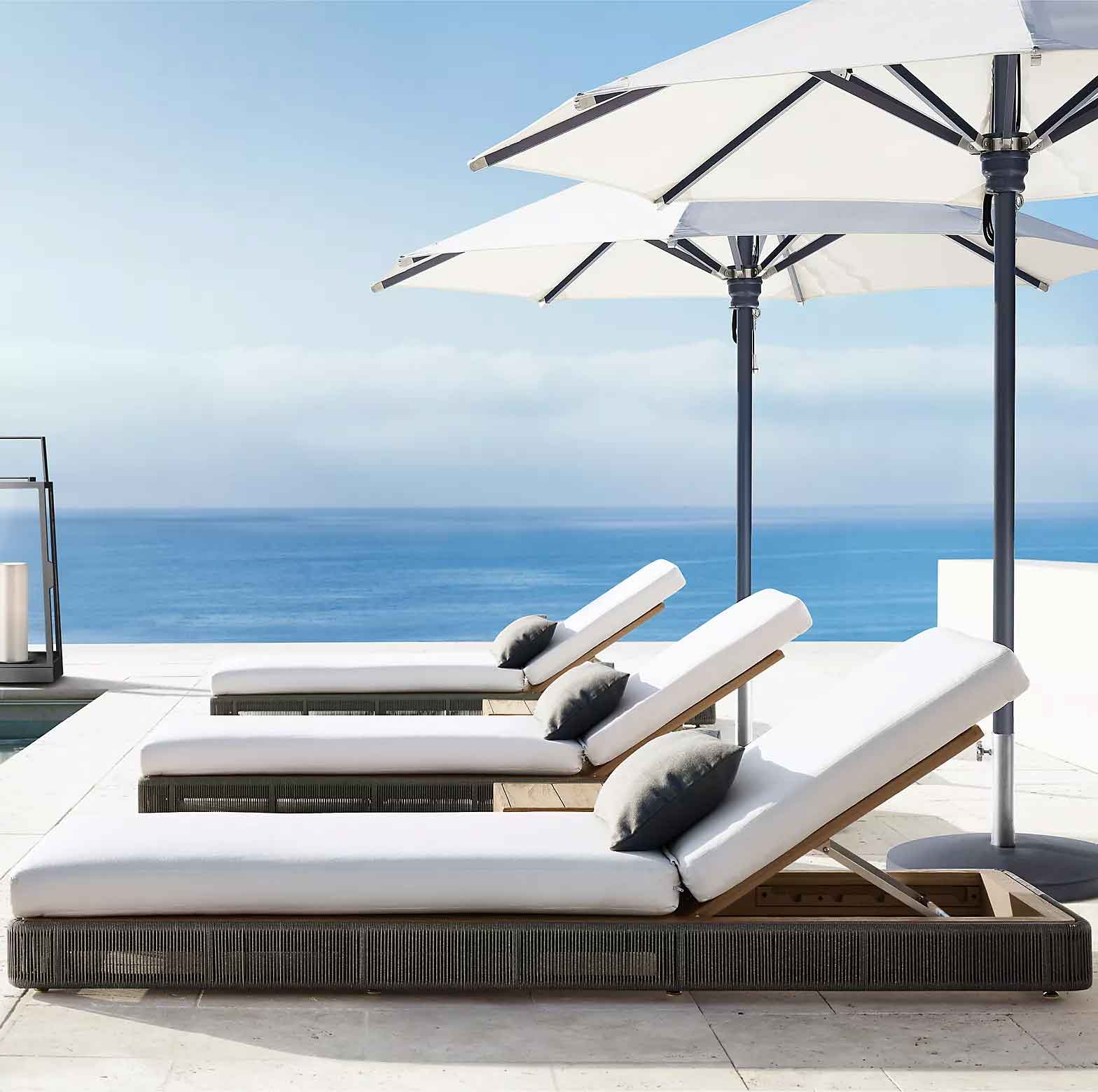
Check fasteners and hinges too. Tighten anything loose, and look for rust or white powder on screws and joints. Recline hinges on loungers deserve a quick test through their full range.
Teak
Teak is forgiving. Its natural oils resist rot, so it can sit outside or in storage without much worry.
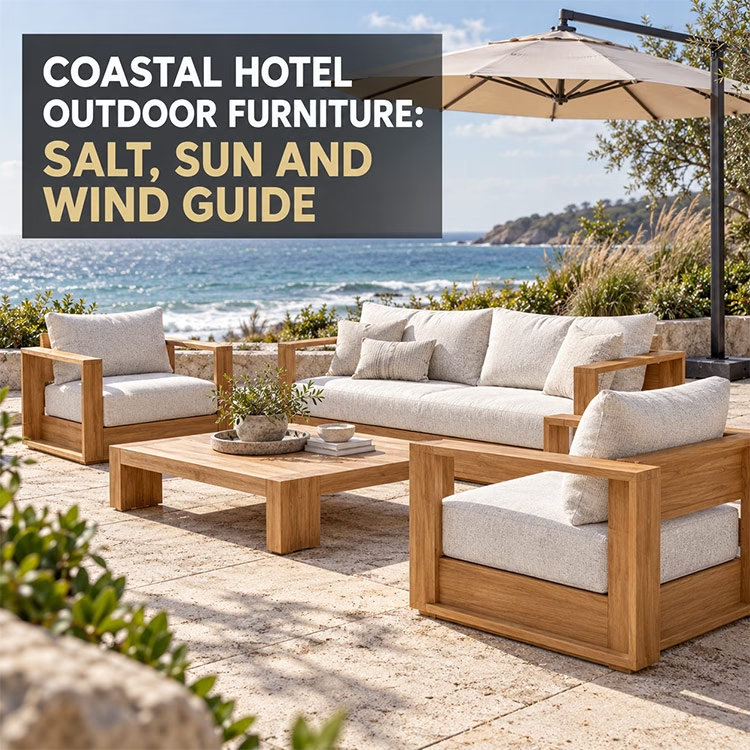
Clean it with mild soap and a soft brush, moving along the grain. Let it dry fully. Then decide about color. Left alone, teak weathers to silvery gray, and that’s fine. If you want to keep the honey-brown tone, oil it. Do that when the wood is clean and dry, ahead of the season you want it looking its best.
When covering teak, use a breathable cover. Wrapping it tightly in plastic can trap moisture against the wood.
Woven and Rattan-Style Pieces
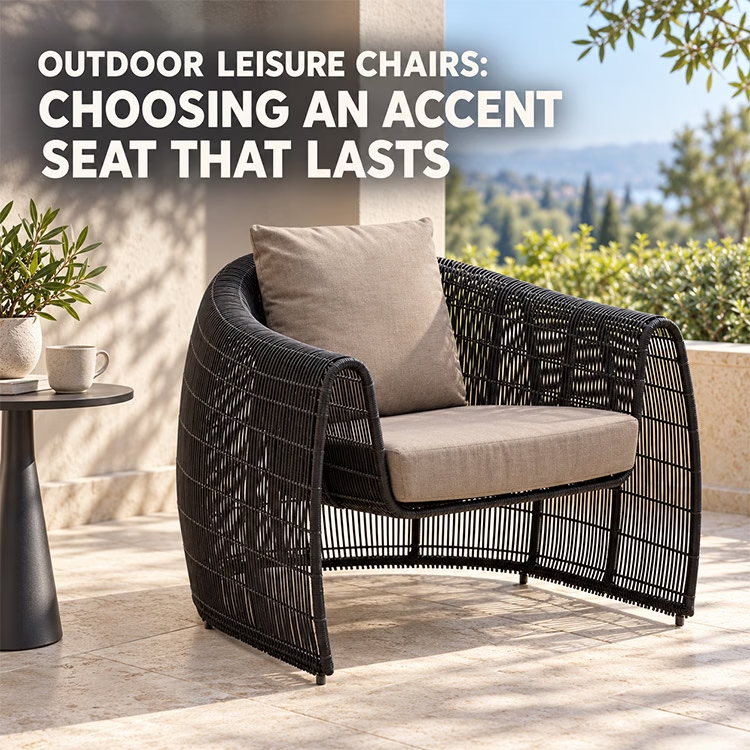
Woven synthetic furniture needs gentle handling. Use a soft brush and mild soap, and get dirt out of the weave. Avoid blasting it with a pressure washer, which can push water into the fibers and damage the weave.
Check for loose or frayed strands, especially at the tight curves near the frame. Catching a loose strand early is much easier than fixing a section later. Check the manufacturer’s guidance for very cold climates, since some synthetic materials behave differently in a hard freeze.
Cushions: The Part That Most Needs Care
Cushions are where storage goes wrong most often. A damp cushion in a closed space turns into a mildew problem in a few weeks.
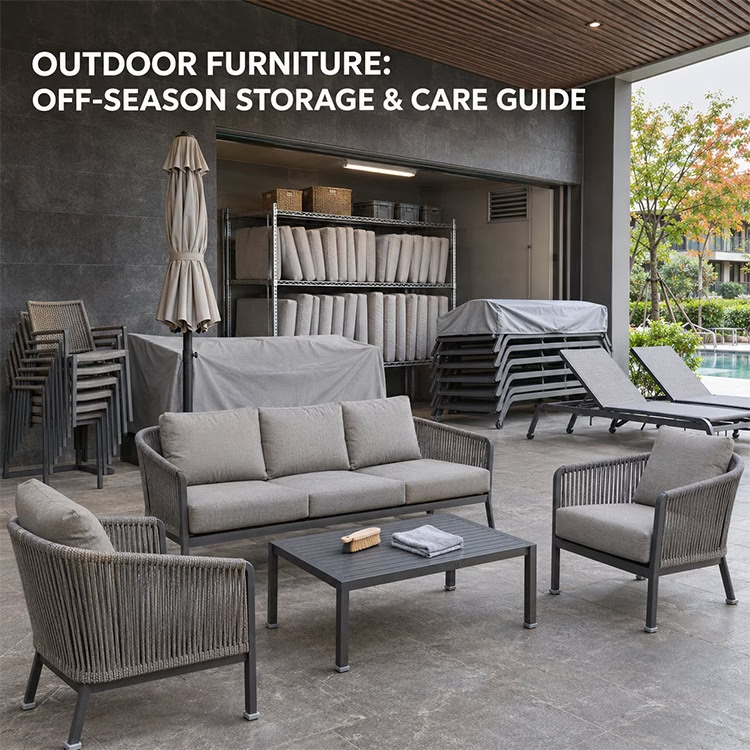
Remove covers and wash them following the care label. Let the foam dry completely, ideally in a ventilated spot. Then store cushions indoors in a dry, ventilated space, off the floor. Avoid sealed plastic bags, which trap humidity. Breathable storage bags or covers work better.
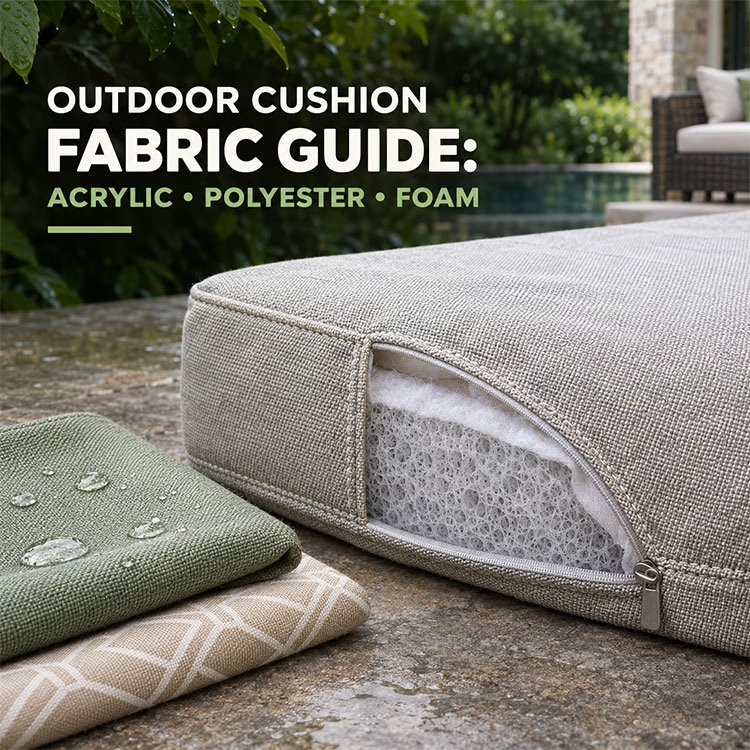
If you’ve got quick-dry foam, it dries faster and helps a lot here, but it still needs to be dry before it’s put away. For fabric choices that make this easier, see our cushion fabric guide.
Umbrellas, Daybed Canopies, and Shades
Close umbrellas and take down canopies before storms and before the off-season. Clean the fabric, dry it, and store it somewhere dry.
For a cantilever design like our Cantilever Umbrella, close and secure it whenever strong wind is forecast, and check the base and the tilt mechanism before reinstalling in spring. Canopies on daybeds, such as the Outdoor Round Daybed, catch wind too, so have a plan for stormy days.
Hanging Swings
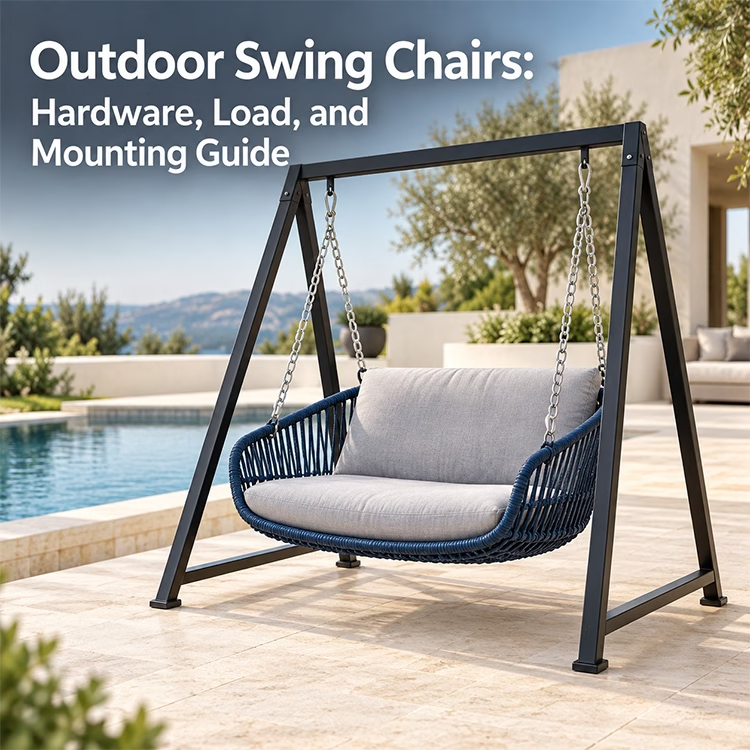
A swing carries load from a hook or chain, so inspect it before you put it away and before you hang it again.
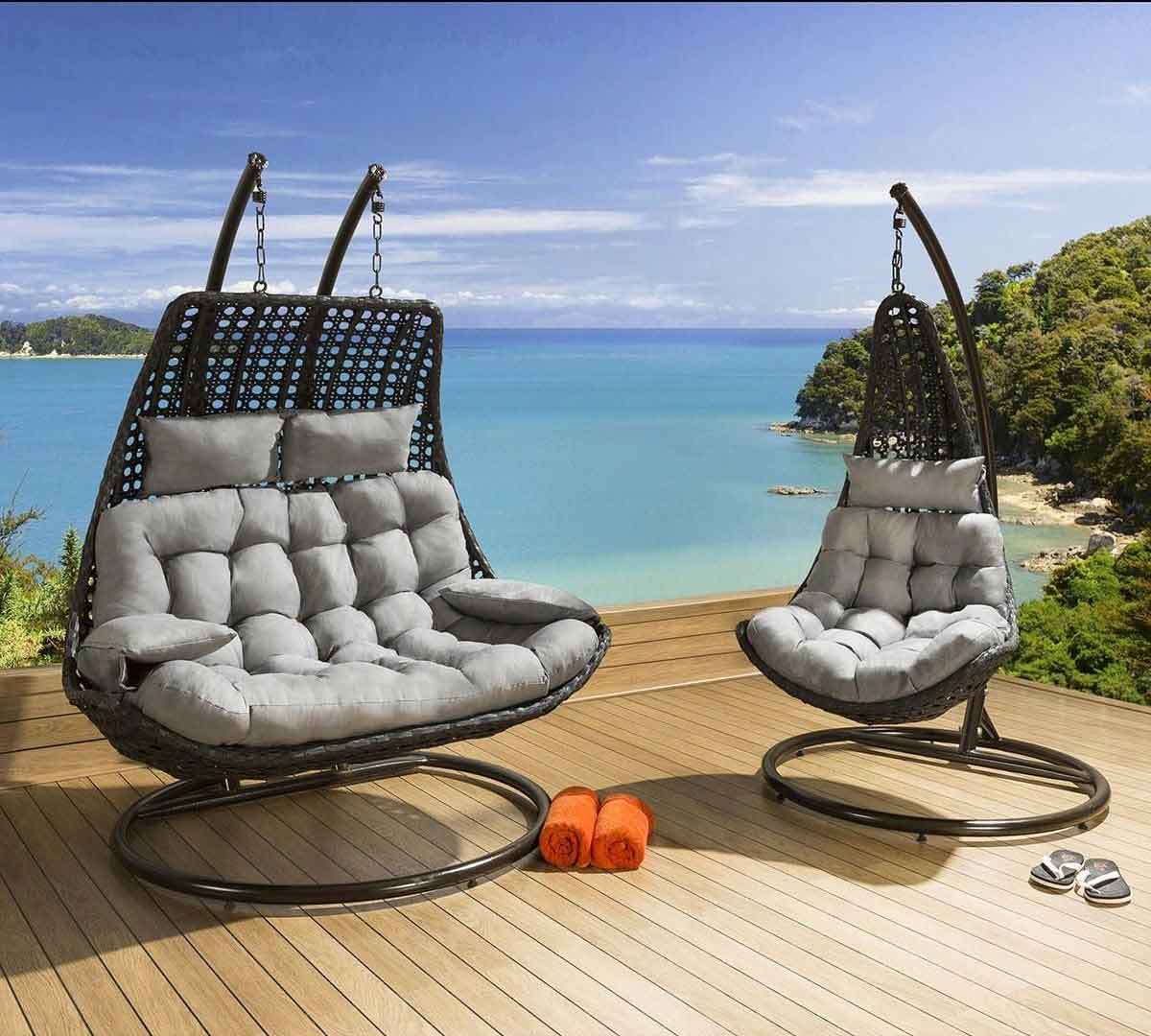
Look at the chain, hook, and mounting points for rust, wear, and loose bolts. If the seat can be taken down for the off-season, store it dry. When you reinstall, check the hardware again. For the details, see our Couple Swing, which ships without mounting hardware, so confirm your anchor and inspection routine with your installer.
Covers, Stacking, and Where to Put Things
If furniture has to stay outside, use covers that fit well and breathe. Our product pages recommend custom-fit outdoor covers to protect furniture from the elements and slow aging. Make sure covers are secured so wind can’t lift them, and leave some ventilation so moisture can escape.
For stackable pieces like sun loungers, stack them neatly with soft separators so frames and weave don’t rub. Keep furniture off bare ground or wet floors. A pallet or a few blocks of wood is enough to stop moisture creeping up from below.
Indoor storage beats outdoor, if you have the space. A dry, ventilated room keeps most problems from starting.
Doing It at Hotel Scale
A property with dozens or hundreds of pieces needs a system, not a one-off effort.
Assign someone to own the process. Make a simple inventory, by zone, so nothing gets lost or left outside. Do the work in the same order each year: clean, dry, inspect, repair, store. Label stored pieces and cushions. Photograph chips and damage so repairs can be planned over the off-season instead of rushed.
Write a one-page card for the team. It prevents most avoidable mistakes.
Spring Restart Checklist
When the season returns, check frames and fasteners, test any moving parts, inspect umbrellas and swing hardware, refresh cushions, and give everything a rinse. It takes much less time than the shutdown did, because you caught problems early.
Frequently Asked Questions
Should outdoor furniture be covered or stored indoors for winter? Indoors is best if you have dry, ventilated space. If pieces must stay outside, use fitted, breathable covers that are secured against wind.
How do I stop cushions from getting moldy in storage? Wash covers, let the foam dry completely, and store cushions in a dry, ventilated place off the floor. Avoid sealed plastic bags, which trap humidity.
Does aluminum furniture need winter care? It doesn’t rust, but you should check the powder coat for chips, touch them up, and tighten any loose hardware before storing.
Do I need to oil teak before winter? Not for protection, since teak resists rot on its own. Oil it only if you want to keep the honey-brown color instead of letting it weather to gray.
Is it safe to pressure wash woven furniture? Better not to. A pressure washer can push water into the weave and damage the fibers. Use a soft brush and mild soap instead.
Where This Fits at Feidao Furniture
Foshan Feidao Furniture Co., Ltd. has made outdoor furniture since 2009. The office, factory, and exhibition hall cover more than 6,000 square meters, and the range includes aluminum, teak, and woven pieces for hotel and resort projects. For care guidance on a specific model, or for matching touch-up paint and custom-fit covers, contact Feidao with the product name.
Welcome to follow us on Instagram and TikTok.
Or contact us directly.
Want to read another article? Please click this: Outdoor Cushion Fabric Guide: Acrylic, Polyester, Foam