
Outdoor Dining Sets for Restaurants and Resorts: Tabletop, Base, and Chair Details That Matter
An outdoor dining set gets a different kind of workload than almost anything else on a patio. Sofas and loungers get sat on. A dining table gets sat at, leaned on, spilled on, and pulled in and out of position by a chair every single time someone sits down. For a restaurant terrace or a resort dining area ordering a dozen sets at once, the details that matter aren’t really about the overall look. They’re in the tabletop material, how the base handles wind and wobble, and whether the chairs actually stack for storage. Here’s what to check.
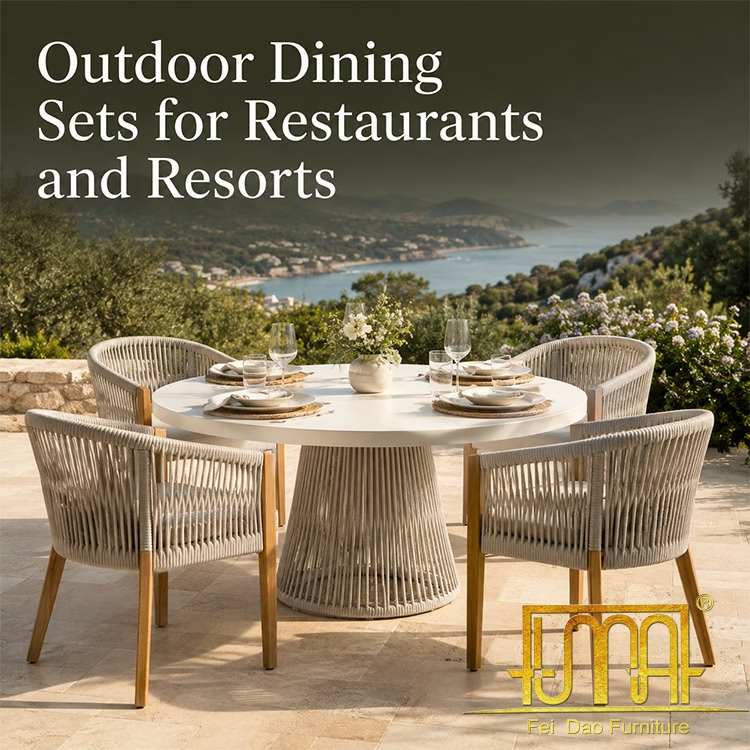
Tabletop Material: The Decision That Shapes Everything Else
Teak remains a common choice for outdoor dining tabletops, and for good reason. It resists rot without chemical treatment and develops a natural patina over time that a lot of properties actually want. But teak isn’t the only option worth considering, and it comes with tradeoffs the other materials don’t.
High-pressure laminate tabletops have gotten a lot better in recent years. They resist scratching and staining better than most wood finishes, don’t need any oiling, and can mimic wood grain or stone convincingly enough that guests rarely notice the difference up close. For a restaurant doing heavy daily turnover, that low-maintenance profile often outweighs the appeal of real wood grain.
Glass tops look sharp in photos but show fingerprints and water spots constantly, which means near-continuous wiping during service hours. They’re a better fit for a lounge or bar-height table that sees lighter use than for a full dining table turning over multiple parties a night.
Whatever the surface, ask specifically how it’s rated for outdoor exposure. A tabletop material built for indoor use that just gets marketed for patios will warp, fade, or crack faster than one engineered specifically to handle sun and moisture cycling.
Base Stability: Where Wobble and Wind Both Start
A dining table that wobbles even slightly becomes a constant, low-grade annoyance for every guest who sits at it, and it’s usually a base problem, not a tabletop problem. Look for a base with a wide enough footprint relative to the tabletop size, and check whether the connection between the legs and the tabletop uses adjustable levelers. Outdoor patios and pool decks are rarely perfectly flat, and a table without leveling capability will wobble on some percentage of placements no matter how well it’s built.
For raked-leg designs, the angle and cross-bracing matter more than they look like they should. A set of crisp, raked legs with curved arms photographs beautifully, but if there’s no bracing bar connecting the legs, that same design can develop side-to-side movement faster than a straight-leg table would under the same use.
Wind is a separate consideration for open-air dining areas, especially near the coast or on an elevated terrace. A lightweight table with a small base footprint can shift in a strong gust even without anyone touching it, which disrupts service and can chip a tabletop edge if it knocks against a neighboring table.
Chair Design: Comfort, Stacking, and Arm Clearance
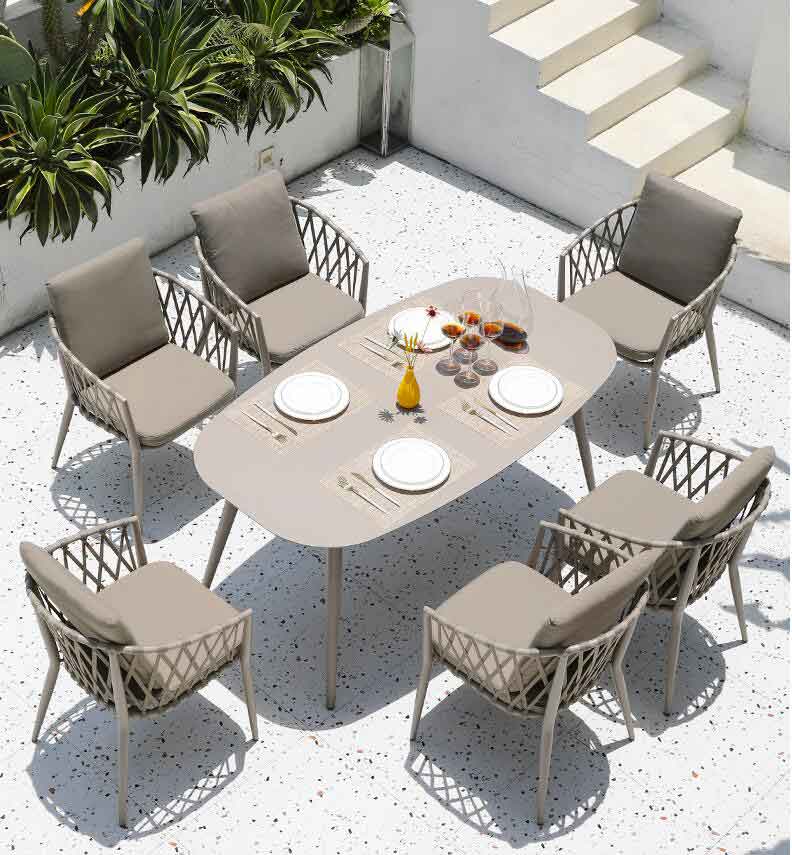
Dining chairs get pulled out and pushed in more times per day than almost any other piece of furniture on a property, so the connection points matter as much here as anywhere else covered in this series. Rope-weave or woven-back armchairs bring texture and a lighter visual weight than a solid wood back, and they tend to be more comfortable for longer meals since the weave gives slightly rather than sitting rigid against a guest’s back.
Stacking matters more than most buyers think about until storage season arrives. A chair that stacks cleanly saves real space when a restaurant needs to store fifty or eighty chairs during an off-season or ahead of a storm. A chair that doesn’t stack, no matter how comfortable it is, becomes a real logistics problem at that scale.
Arm height also deserves a quick check against the table height. Armchairs that don’t tuck fully under a table waste floor space in a dining area where every square foot matters, and it looks sloppy when half the chairs at a long table sit further out than the rest.
Weather and Maintenance Across Materials
A full dining set typically combines two or three materials working together, and each ages differently. An aluminum-and-wicker frame with a wood-accented top means tracking two maintenance routines instead of one: the woven basket weave needs the same UV-stabilized, properly tensioned care covered in earlier guides, while any wood elements need periodic oiling if the property wants to keep the original tone rather than let it weather naturally.
Cushions, where used, should use quick-dry foam with a mesh bottom panel for drainage, same as every other outdoor seating category. For a restaurant running daily service, cushion covers in a solution-dyed, stain-resistant fabric hold up to food and drink spills dramatically better than a standard printed fabric.
Ordering Full Sets vs. Mixing Components
A homeowner usually buys a matched table-and-chair set as a single unit. A restaurant or hospitality buyer often needs more flexibility: extra chairs beyond the standard set ratio for larger parties, a mix of two-top and larger tables that can combine for bigger groups, or a consistent chair style paired with tables in a couple of different sizes across a dining room.
It’s worth asking a manufacturer directly whether chairs and tables can be ordered in different ratios or combined across sizes within the same finish and weave batch, since a lot of standard sets are only sold as fixed groupings that don’t map cleanly onto how a real dining room gets laid out.
Frequently Asked Questions
What’s the most durable outdoor dining tabletop material for a restaurant?
It depends on maintenance capacity as much as durability. Teak looks natural and resists rot well but needs periodic oiling to keep its color. High-pressure laminate needs almost no maintenance and resists scratching and staining, which often makes it the more practical choice for heavy daily turnover.
Why does a dining table wobble even when the legs look sturdy?
Usually it’s the base footprint or the leveling mechanism, not the legs themselves. A narrow base relative to the tabletop size, or a design without adjustable feet, will wobble on an uneven patio surface no matter how well the frame is built.
Should restaurant dining chairs be stackable?
For any property storing a meaningful number of chairs seasonally or during storms, yes. Non-stacking chairs, even comfortable ones, become a real space problem once you’re dealing with dozens of units needing storage.
Can dining sets be ordered with a different chair-to-table ratio than the standard set?
Most manufacturers serving hospitality projects, Feidao included, can adjust chair counts or mix table sizes within a matching finish batch. Worth confirming directly rather than assuming a fixed set is the only option.
How often does an outdoor dining set need maintenance?
It varies by material. Woven basket weave needs an occasional rinse and a check for UV wear. Teak accents need oiling once or twice a year to hold their color. Cushion covers, if used, should be cleaned regularly and inspected for wear given how much daily contact a dining set gets.
Where This Fits at Feidao Furniture
Foshan Feidao Furniture Co., Ltd. has manufactured outdoor furniture since 2009, running an office, factory, and exhibition hall covering more than 6,000 square meters. The Outdoor Wood Dining Set reflects the points above, combining a durable aluminum frame with all-weather wicker basket-weave armchairs and quick-dry cushions built for real dining room use. Browse the full Teak Dining Set range or the broader Dining Set category to compare configurations, or contact Feidao directly for a custom chair ratio or hospitality-scale quote.
Welcome to follow our Instagram and TikTok.
Or contact us directly.
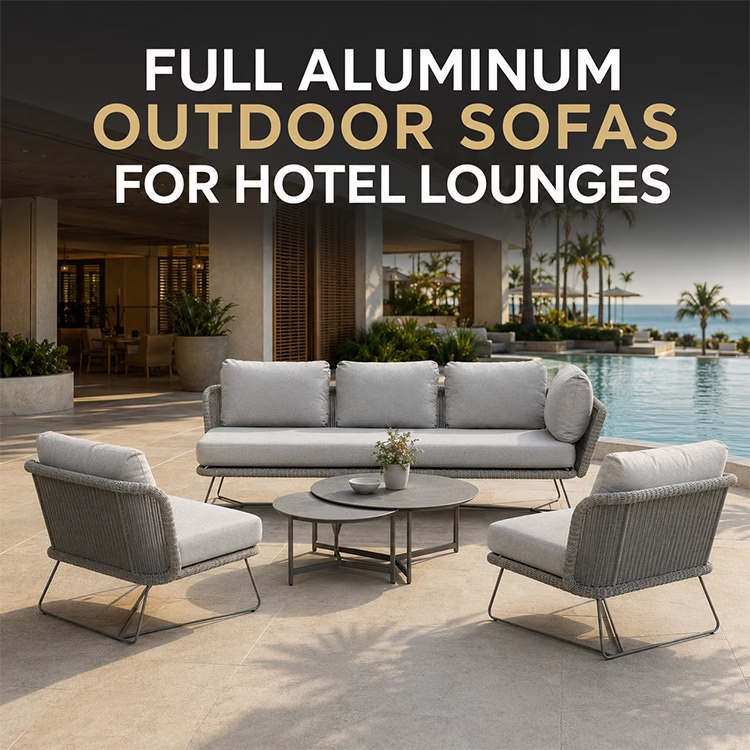
Want to read another article? Please click this: Full Aluminum Outdoor Sofas for Hotel Lounges