

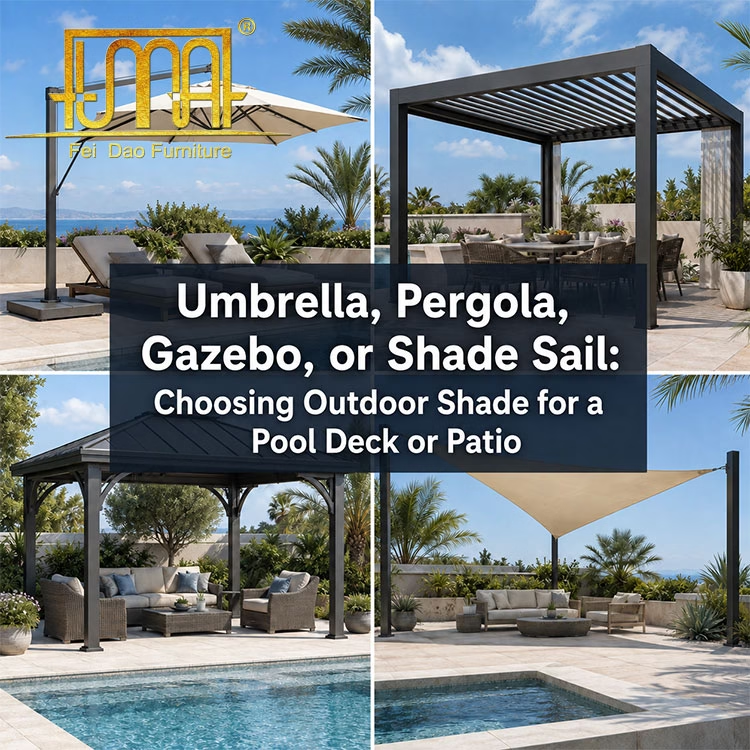
Umbrella, Pergola, Gazebo, or Shade Sail: Choosing Outdoor Shade for a Pool Deck or Patio
Shade sounds like a simple problem. Put something overhead, block the sun, done. In practice, the four common options — umbrellas, pergolas, gazebos, and shade sails — solve pretty different problems, and picking the wrong one means either replacing it in a year or watching guests avoid the area entirely because it doesn’t actually block sun where they need it. Here’s how to think through the choice, whether you’re covering a backyard patio or a hotel pool deck full of loungers.
Start With How the Space Actually Gets Used
Before comparing structures, it helps to nail down two things: how long shade needs to last in one spot, and how much of the day the sun hits that spot directly. A shade solution for a fixed dining table works differently than one for a pool deck where loungers get repositioned daily. A structure meant to stay up year-round needs sturdier anchoring than something that only comes out for a few months of high season.
Umbrellas: Flexible, and Still the Default for Good Reason
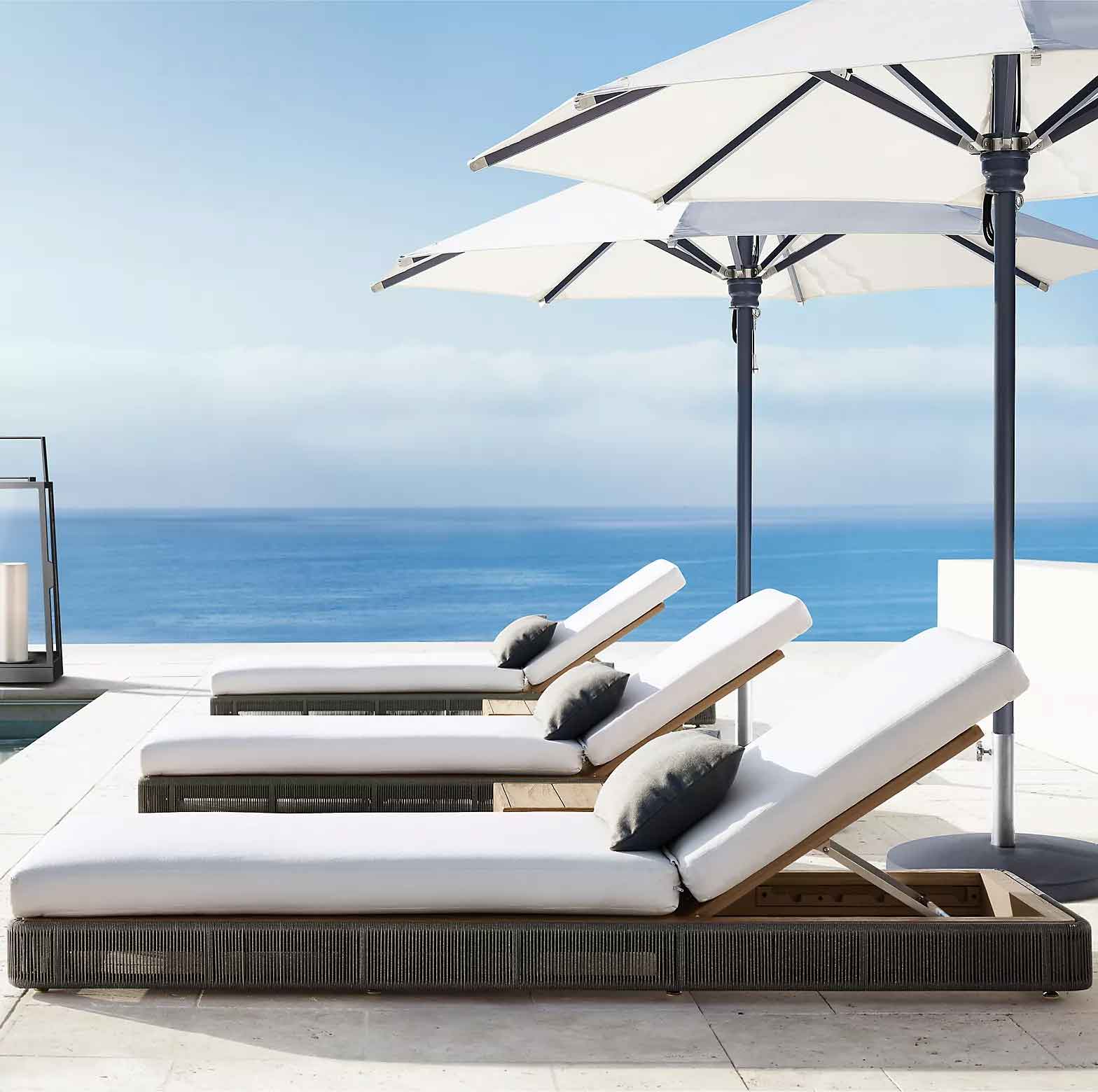
A cantilever or center-pole umbrella remains the go-to option for one simple reason: it moves. Tilt it, rotate it, or fold it down entirely when a storm rolls in, and none of that requires tools or a maintenance crew. A cantilever design in particular keeps the pole off to the side, so there’s no post in the middle of a lounge area blocking movement or forcing furniture into an awkward ring around it.
The tradeoff is coverage size. Umbrellas top out around 10-13 feet across before wind load becomes a real engineering problem, so a single umbrella won’t cover a large dining or lounge zone the way a pergola or gazebo can. For a pool deck with individual loungers or a small dining table, that’s rarely an issue. For a large open lounge area meant to shade a dozen guests at once, one umbrella per two or three loungers usually works better than trying to stretch a single canopy over everyone.
What actually separates a good umbrella from a bad one is the base and the fabric, not the pole. A weak base tips in wind, full stop, and that’s both a liability and a fast way to damage the canopy fabric. Solution-dyed acrylic canopy fabric holds color for years; printed polyester fades within a season under strong sun. Marine-grade fittings on the joints matter more near saltwater, where cheap hardware corrodes and the tilt mechanism seizes up within a year or two.
Pergolas: Built for a Fixed Spot, Not for Moving
A pergola works best when you know exactly where shade needs to live long-term. Unlike an umbrella, it’s anchored in place, so it suits a dining terrace, an outdoor kitchen, or a lounge zone that isn’t going to be rearranged next season. Aluminum pergolas with adjustable louvers give you some control over how much sun actually gets through, closing up during peak afternoon heat and opening for morning light.
They also do double duty as a structural anchor for a space. String lights, curtains, or a ceiling fan can attach to a pergola in a way that’s just not practical on an umbrella, which matters if a property wants the shaded area to double as an evening gathering spot, not just midday sun cover.
The obvious downside is permanence. Installing a pergola means committing to a layout, and it needs a proper foundation or footing to handle wind load, especially the louvered aluminum kind, which catches more wind than an open lattice structure does.
Gazebos: Full Coverage for Longer Stays
A gazebo covers more than a pergola typically does, and it’s usually enclosed enough to block rain as well as sun, which the other three options generally can’t do well. That makes it the right call for spaces meant to stay usable through more of the year, or for a spot where guests will linger for a while, like a dining pavilion or a spa relaxation area rather than a quick pass-through zone.
The weight that makes a gazebo weatherproof also makes it the least flexible option here. Moving one isn’t a weekend project, and a hard-roof gazebo needs the same kind of foundation planning as a small structure, not just a furniture placement decision.
Shade Sails: The Modern Pick for Odd-Shaped Spaces
A shade sail is basically a stretched, tensioned piece of fabric anchored between three or more points, and it fills a niche the other three don’t handle well: irregular or angular spaces where a round umbrella or a rectangular pergola just doesn’t fit the geometry. Sails also read as more contemporary visually, which is part of why they’ve become popular for boutique hotels and modern residential builds over the last several years.
Coverage and wind resistance depend entirely on the anchoring. A sail needs solid mounting points, whether that’s a building wall, a dedicated post, or existing structure, and the tension has to be right or the fabric sags and pools water after rain instead of shedding it. UV-stabilized, breathable mesh fabric handles both sun block and airflow better than a fully solid canopy, which matters in hot, humid climates where trapped heat under a sail can actually make a space feel worse, not better.
Matching Shade to the Furniture Underneath
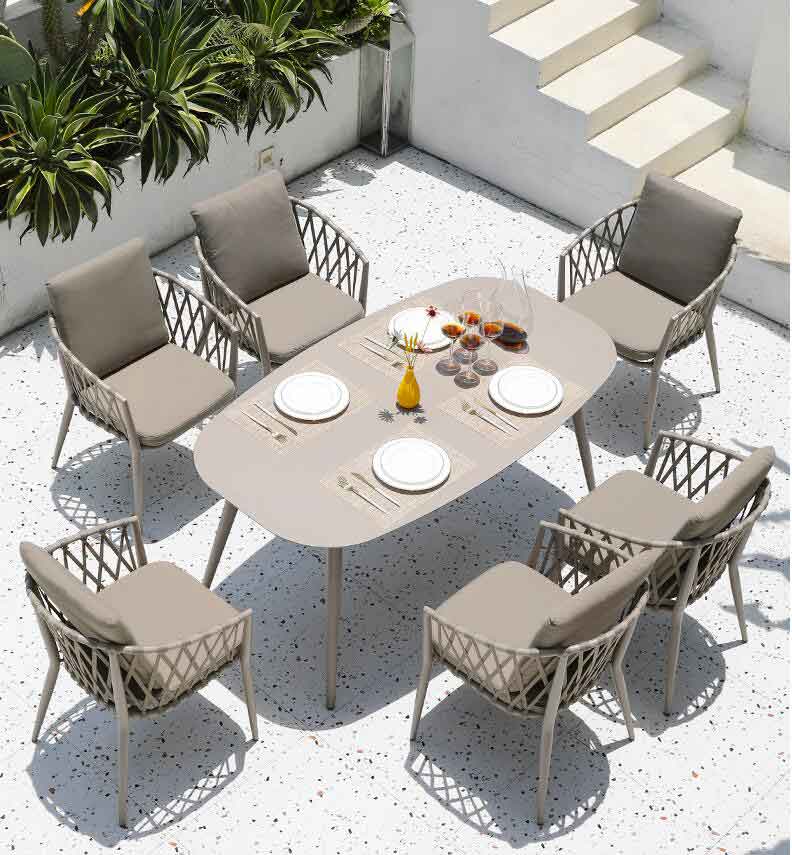
Shade and seating aren’t really separate decisions, even though they often get bought separately. A pergola over a dining set needs enough clearance for chairs to pull out fully. A shade sail over a lounge area works best when it’s angled to track the sun’s path across the hottest part of the day rather than just centered overhead. And an umbrella paired with sun loungers needs a base heavy enough to stay put even when the loungers around it get repositioned throughout the day, which happens constantly on a busy hotel pool deck.
For a hospitality project specifically, matching the shade structure’s frame finish to the furniture underneath (same powder coat color, same weave tone) makes the whole area read as one coordinated design rather than a shade structure that got added on as an afterthought.
Ordering for a Hospitality Project
A homeowner buying one or two umbrellas cares mostly about looks and whether the base is heavy enough for their yard. A hotel or resort project usually needs a batch of matching umbrellas, or a coordinated mix of umbrellas and pergolas, across an entire pool deck or terrace, with color and finish consistent across the whole order. Wind rating matters more here too. A property in a coastal or storm-prone region needs shade structures rated to fold down or withstand higher wind loads without staff scrambling to secure them before every storm.
Worth asking a manufacturer directly about base weight options, canopy fabric grade, and whether frame color can be matched across umbrellas and any pergola or gazebo pieces in the same order.
Frequently Asked Questions
What’s the main difference between a cantilever umbrella and a center-pole umbrella? A cantilever umbrella has an offset pole and arm, so there’s no post in the middle of the shaded area. A center-pole umbrella is simpler and usually cheaper, but the pole sits right in the middle of the space it’s covering, which can get in the way around a table or a lounge grouping.
How much wind can an outdoor umbrella handle before it needs to come down? It depends heavily on the base weight and the umbrella’s construction, but most quality umbrellas are rated to handle moderate wind when properly weighted or anchored. In storm conditions or sustained high wind, tilting the canopy down or folding it fully is the safer move regardless of the rating.
Is a pergola or a gazebo better for a pool deck? A pergola works well for a fixed lounge or dining zone that wants partial, adjustable shade. A gazebo makes more sense for a space meant for longer stays and full weather protection, since it typically blocks rain as well as sun.
Do shade sails work in humid climates? Yes, especially with a breathable mesh fabric rather than a solid canopy, since mesh lets some airflow through and avoids trapping heat underneath. Proper tension is important either way, since a sagging sail collects rainwater instead of shedding it.
Can umbrella and pergola frame colors be matched for a hotel order? Most manufacturers producing at hospitality scale, Feidao included, can coordinate frame color and fabric across umbrellas, pergolas, and the furniture underneath them. Worth confirming directly, along with base weight options and wind rating, before placing a bulk order.
Where This Fits at Feidao Furniture
Foshan Feidao Furniture Co., Ltd. has manufactured outdoor furniture since 2009, running an office, factory, and exhibition hall covering more than 6,000 square meters, and produces shade structures alongside its sofa, daybed, and sun lounger lines. The Cantilever Umbrella is built with marine-grade materials for exactly the kind of daily repositioning and coastal exposure covered above. Browse the full Shades range to compare current models, or contact Feidao directly for a quote on a coordinated shade and furniture order.
Welcome to follow our Instagram and TikTok.
Or contact us directly.
Want to read another article? Please click this: Aluminum vs Rattan vs Teak Sun Loungers: Which Frame Fits Your Property