

Aluminum vs Rattan vs Teak Sun Loungers
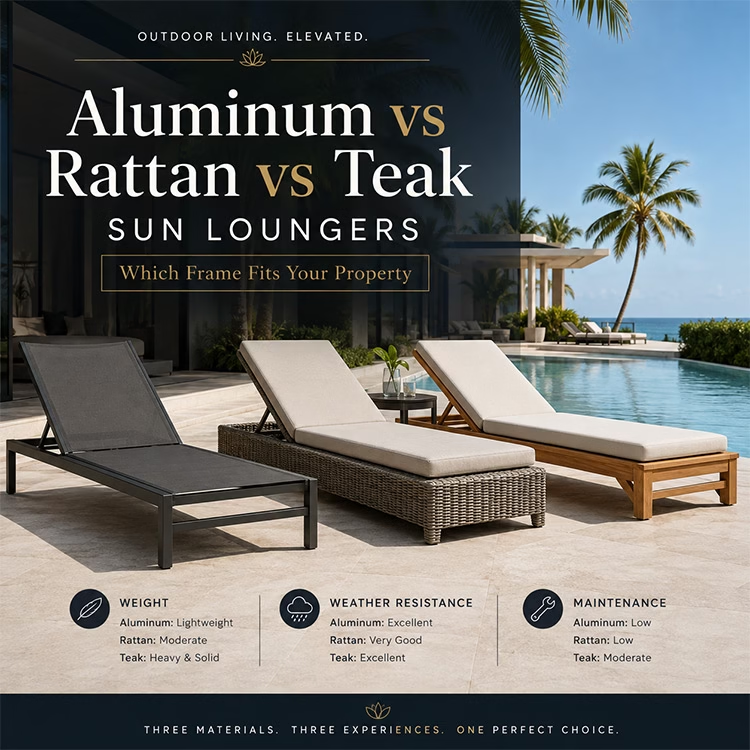
Ask five property managers what the best sun lounger frame is, and you’ll get three different answers, maybe four. None of them are really wrong, either. Aluminum, rattan-wrapped, and teak loungers each solve a different problem well, and which one’s “best” has less to do with looks in a catalog than with your climate, your maintenance staffing, and how the piece gets used day to day. We already covered full aluminum loungers in detail in an earlier post. This one lines all three materials up side by side so you can see where each actually wins, and where it doesn’t.
The Short Version, If You’re in a Hurry
Aluminum wins on weight and low maintenance. Rattan-wrapped wins on texture, at a similar price point to aluminum. Teak wins on long-term rigidity and a look plenty of high-end properties ask for by name — you just pay for it in upkeep. None of the three is “better” outright. They trade off against each other differently depending on where the lounger ends up living.
Weight and Ease of Movement
Aluminum pulls ahead fast here. A full aluminum frame is light enough for one staff member to lift, tilt, and reposition alone, and on a hotel property that gets rearranged all day and stacked away before storms, that’s a bigger deal than it sounds. Rattan-wrapped loungers usually sit on an aluminum core too, so weight-wise they land close to aluminum — just with a woven layer sitting on top of it.
Teak is heaviest by a wide margin, no contest. Oddly, that’s part of why teak loungers feel so planted once they’re placed; they don’t slide around on tile the way something lighter can. The tradeoff is obvious though — repositioning one daily gets old fast, and moving a fully built teak piece alone isn’t always realistic. The lighter, foldable teak models are a bit more forgiving here.
Weather and Salt-Air Resistance
All three hold up outdoors when they’re built right; they just get there through different mechanisms. Aluminum doesn’t rust as a base metal, full stop, and a decent powder coating adds another layer of protection near the coast. The actual weak point is rarely the aluminum itself — it’s a thin or cheap coating that chips at the welds first and lets corrosion creep in from there.
Rattan-wrapped pieces live and die by weave quality. Solution-dyed, UV-stabilized synthetic rattan holds up for years under full sun. Cheap, untreated cord fades and goes brittle in a season or two, sometimes less. Since the weave usually sits over an aluminum frame anyway, the metal underneath tends to be fine even once the weave itself starts looking rough.
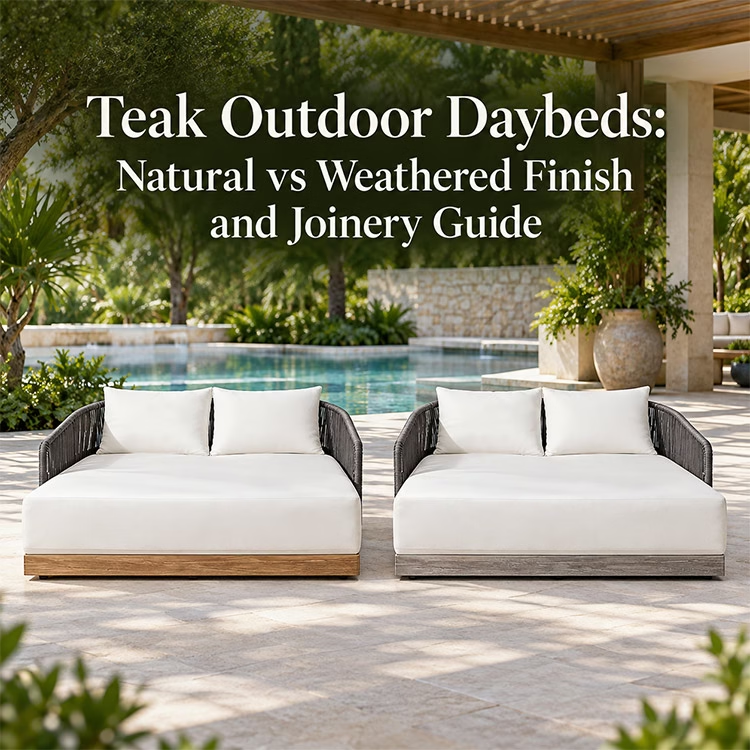
Teak’s natural oils give it real resistance to rot and insects with zero coating needed, and that’s a big reason it’s stuck around this long. Leave it untreated and it weathers to a silvery gray — some properties love that, some don’t, but structurally it holds up either way. Near saltwater it does especially well, so long as the mortise-and-tenon joints were properly kiln-dried and built in the first place; skip that step and you’re asking for loose joints a few humid seasons down the line.
Maintenance Load
Aluminum wins here too, by a wide margin. Rinse it, check the coating for chips now and then, done. On a property running dozens of loungers with a lean housekeeping team, that adds up to more saved labor than it looks like on paper.
Rattan-wrapped needs a touch more care. Soap and water works fine for the rinse, but pressure-washing straight into the weave forces water into the fibers, so staff needs to know the difference. Teak asks the most, honestly. Keeping that honey-brown tone instead of letting it go gray means an oil or sealant pass once or twice a year, and across a large fleet that’s real, recurring labor — even though the wood itself barely needs structural attention.
Look and Feel
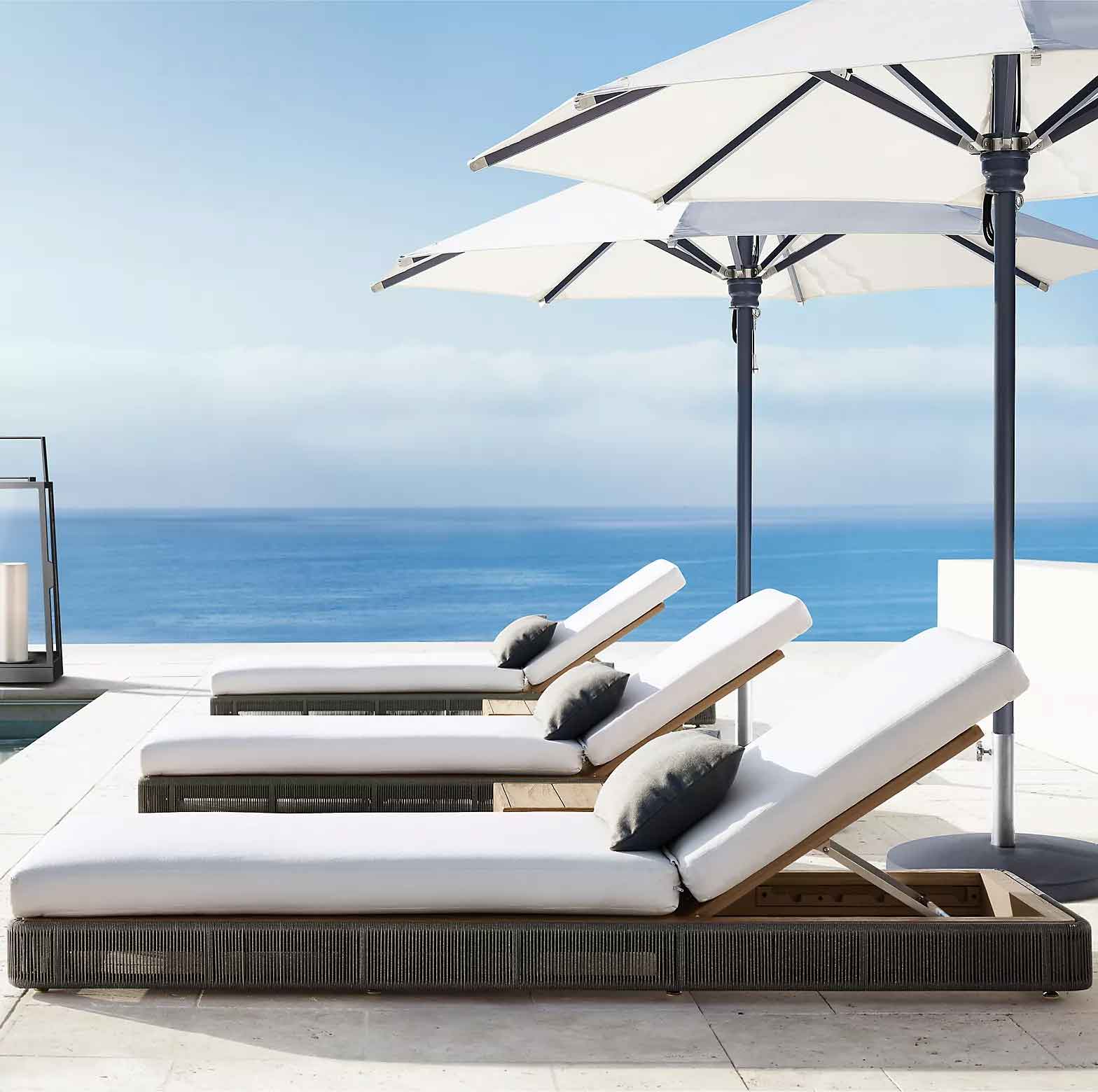
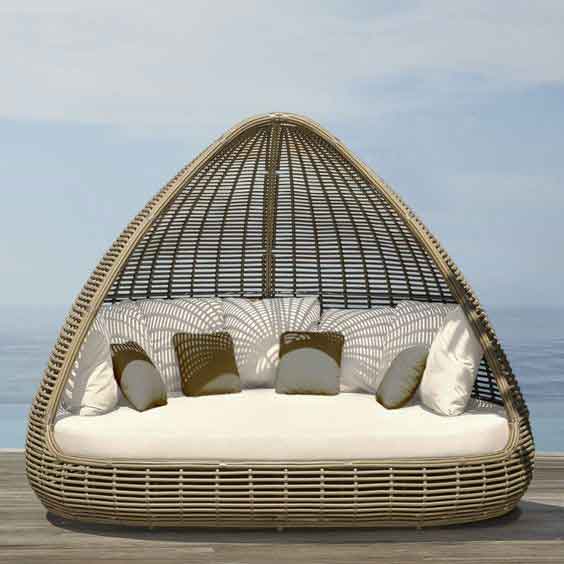
Subjective, sure, but it still shapes guest experience and how a property brands itself. Aluminum reads clean and modern and takes color well, so matching a branded palette is easy. Rattan-wrapped brings texture and a warmer, resort-casual feel that tends to photograph nicely for social media. Teak brings something natural and timeless that a lot of luxury properties specifically request, and it ages into a look guests just associate with higher-end resorts — silvered or oiled, either way.
Cost Over Time, Not Just Upfront
Upfront, rattan-wrapped aluminum and full aluminum usually land close together, with teak sitting higher because of both the material and the labor-heavy joinery. But the invoice isn’t the whole story — it’s the invoice plus years of upkeep after that. A property with a thin maintenance team might genuinely spend less over five years on aluminum, even at a slightly higher sticker price, than on teak needing annual oiling. A property with dedicated grounds staff and a brand built around that natural, high-end look might find teak’s upkeep worth every bit of it.
Quick Reference
- Full aluminum, if low maintenance, easy daily repositioning, and a large fleet staying consistent without eating up staff time matters most.
- Rattan-wrapped, if you want warmth and texture at roughly aluminum’s weight and cost, and you’re willing to train staff on weave care.
- Teak, if the brand leans natural and high-end, you’ve got the staff or budget for regular oiling, and the loungers aren’t moving every day.
Frequently Asked Questions
Which sun lounger frame lasts the longest?
All three can go well past a decade if they’re built correctly, but they fail in different ways. Aluminum lasts for corrosion resistance and a solid coating; rattan-wrapped lasts as long as the weave stays UV-treated; teak lasts for natural rot resistance and proper joinery. Maintenance is usually the real limiting factor, not the material.
Is teak worth the extra maintenance for a hotel pool deck?
Depends on the property, honestly. Teak needs periodic oiling to hold its color, but it delivers a natural, high-end look some brands specifically want — or you just let it weather naturally if the silver-gray look works there instead.
Do rattan-wrapped loungers use the same frame as aluminum loungers?
Usually. Most rattan-wrapped sun loungers sit on an aluminum core with synthetic weave added over it, so they share aluminum’s weight and rust resistance, plus the weave’s own separate care routine on top.
Can these three materials be mixed on the same property?
Definitely, and a lot of properties do exactly that on purpose — teak or rattan-wrapped near a lobby or restaurant terrace for looks, full aluminum around the main pool where daily repositioning and low maintenance actually matter.
Where This Fits at Feidao Furniture
Foshan Feidao Furniture Co., Ltd. has manufactured outdoor furniture since 2009, running an office, factory, and exhibition hall covering more than 6,000 square meters, and makes all three frame types covered here. Browse the Full Aluminum Sun Lounger range, the Rattan Sun Lounger range, or the Teak Sun Lounger range to compare specific models, or contact Feidao directly for a quote or a material recommendation based on your property’s climate and traffic.
Welcome to follow our Instagram and TikTok.
Or contact us directly.
Want to read another article? Please click this: Full Aluminum Sun Loungers for Hotel Pool Decks