
Single-Seat Teak Sofas for Patios: What Actually Determines Quality
Here’s the thing about shopping for outdoor sofas online: two pieces can look nearly identical in the photos and still age nothing alike after one humid summer or one wet coastal winter. The gap you can’t see in a listing photo is usually hiding in three places — the frame joinery, the grade of the weave, and how the cushion core was actually built. This guide walks through what to check before you buy, using a teak-frame, all-weather basketweave single-seat sofa as the example, since that’s the format we get asked about most for patios, pool decks, and small hospitality projects.
Why a Single-Seat Format Gets Specified So Often
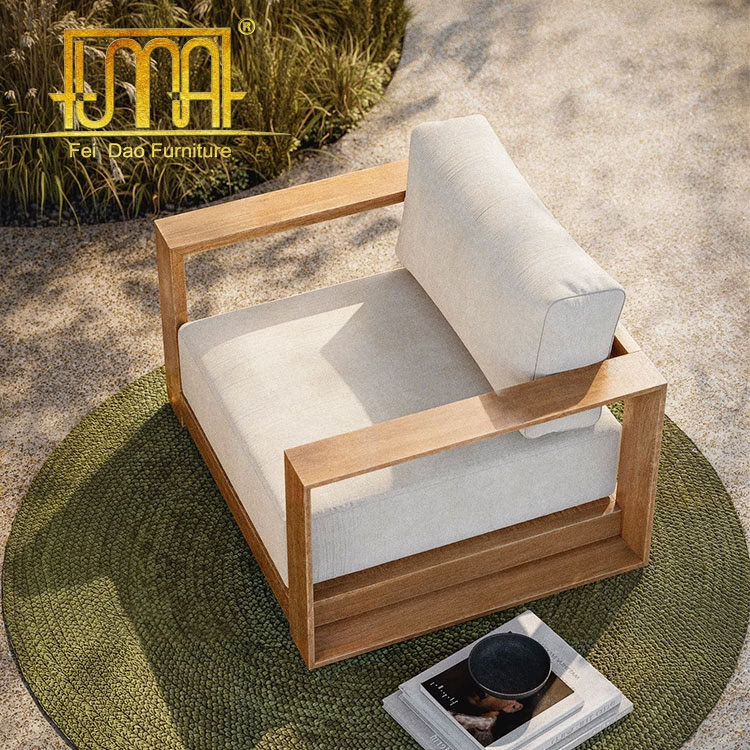
A single-seat sofa (some people call it a club chair, some call it a lounge chair — depends who you ask) solves a problem that a fixed sectional just can’t. A sectional locks a patio into one layout. Single seats don’t. You can pull a few into a circle for conversation one weekend, line them along a pool edge the next, then push them aside for a party. For resorts and boutique hotels especially, that flexibility ends up mattering more than people expect, because outdoor lounge areas almost never get used the same way twice in a week.
There’s a catch, though. A single seat has to carry more load per unit than a sectional module does, simply because there’s no neighboring piece to share the weight. The frame, the arm supports, the leg joints — all of it takes the full force whenever someone shifts position. That’s exactly where a cheap build starts to creak, or worse, come loose within a season.
Frame Material: Why Teak Still Wins for Structural Pieces
Teak has stuck around as the default frame choice for a fairly unglamorous reason. It has a naturally high oil and silica content, which resists rot and insects without any chemical treatment added. Aluminum is lighter. Rattan-wrapped steel is cheaper. But for a piece sitting through sun, rain, and swinging temperatures year after year, teak’s dimensional stability is genuinely hard to match — it expands and contracts less than most hardwoods when humidity shifts, and that’s the actual reason teak joints don’t split the way lower-grade timber tends to.
So don’t just ask “is it teak.” Ask what grade, and ask how the joints are made. Manufacturers worth buying from use mortise-and-tenon or dowel joinery, reinforced with marine-grade glue — not screws driven straight into end grain. A handcrafted frame that’s been properly kiln-dried will hold its shape for a decade or longer outdoors. A frame cut from wet or reclaimed teak scraps won’t, no matter what finish gets brushed over it.
The Basketweave Wrap: Where Most Corners Get Cut
The textural, all-weather basketweave wrapped around a lot of modern teak frames isn’t just there to look good. It doubles as a light cushioning layer between the wood and whoever’s sitting on it, and it’s what gives the silhouette that airy, less-boxy feel next to a solid wood arm. The weave itself is usually synthetic rattan or a resin-based cord, and this is genuinely where quality swings the most between one supplier and another. Cheaper cord is thin and skips the UV treatment — it fades and turns brittle after a year or two in direct sun. Better cord is UV-stabilized and woven tightly enough that pressing a finger into it barely gives at all.
If you get to check a piece in person before buying, press on the weave near a corner or seam. It should feel taut rather than slack. And the color should read even across the whole surface — not glossy in some spots and dull in others, since patchy glossiness is usually a coating trying to hide a lower-grade cord underneath, not real UV protection.
Cushions: The Part That Fails First
Frames and weaves can last a decade. Cushions almost never do — and they’re also the easiest part for a manufacturer to quietly under-spec, since it doesn’t show up in a photo. Look for quick-dry, open-cell foam rather than standard upholstery foam; standard foam holds water and starts growing mold within days of a heavy rainstorm. Fabric matters just as much. Solution-dyed acrylic keeps its color far longer than printed or pigment-dyed polyester, and it holds up against the sun-bleaching that leaves outdoor cushions looking patchy by the end of one summer.
Thick, deep cushions have basically become the visual signature of current outdoor sofa design, pushing the proportions closer to something you’d expect indoors. That look only holds up over time, though, if the foam core is dense enough to resist going flat after a season of actual use.
Residential Patio vs. Hospitality Order: Different Questions to Ask
A homeowner buying one or two pieces and a hotel group ordering forty units for a pool deck are solving completely different problems, even if they’re looking at the exact same product photo.
For a home order, the priority is usually finish consistency, cushion comfort, and whether the piece pairs with whatever dining set or daybed is already out there. For a hospitality order, priorities shift toward batch consistency across dozens of units, the packing method for container shipping, lead time, and whether the factory can match a property’s existing color scheme. A factory built around small retail orders isn’t always ready to handle a container-scale hospitality contract — and the reverse holds true too. Worth asking directly about minimum order quantities and customization turnaround before assuming either side can actually deliver.
Maintenance: What Keeps a Teak Sofa Looking Right
Left untreated, teak turns a silvery gray over time. Some people love that weathered look; plenty of others don’t. If you want to hold onto the original honey-brown color, an occasional teak oil or sealant application — once or twice a year depending on your climate — will slow that down. The synthetic weave usually just needs a rinse with mild soap and water; skip the pressure washer directly on it, since that can force water into the wrap fibers. If the cushions aren’t quick-dry foam, cover or store them during long off-season stretches. Even with quick-dry foam, keeping covers on through heavy rain will still stretch out the fabric’s life.
Frequently Asked Questions
Is teak actually better than aluminum for an outdoor sofa frame?
For structural, high-touch pieces like a sofa, yes — teak’s natural oils give it long-term rot and insect resistance without coating, and it holds joinery better over years of temperature and humidity swings. Aluminum is lighter and often cheaper, but it doesn’t carry the same natural weather resistance and can dent.
Does a single-seat teak sofa need to match a full sofa set?
Not necessarily. Single seats are commonly ordered as flexible add-ons to an existing set, or as standalone pieces for smaller patios, balconies, or as extra seating around a fire pit or daybed area.
How long does a well-built teak sofa frame last outdoors?
A properly kiln-dried, correctly joined teak frame typically holds up for a decade or more with minimal maintenance. The weave and cushions usually need attention or replacement sooner, depending on climate and sun exposure.
Can the weave color and cushion fabric be customized for a hotel or resort order?
Most manufacturers that serve hospitality clients, including Feidao Furniture, offer customization on weave color, cushion fabric, and packing method for bulk or project orders — this is worth confirming directly with the factory before placing a container-scale order.
What’s the difference between “all-weather” wicker and regular rattan?
“All-weather” wicker or basketweave is a synthetic, UV-stabilized cord built to resist sun and moisture damage outdoors. Natural rattan carries no weather rating and will deteriorate quickly if left outside without cover.
Where This Fits at Feidao Furniture
Feidao Furniture has been building outdoor furniture out of Foshan, Guangdong since 2009, running a combined office, factory, and exhibition space of more than 6,000 square meters. The Teak Sofa Sale single-seat sofa follows the same construction logic covered above — a handcrafted teak frame wrapped in an all-weather basketweave, paired with substantial cushions built for both a home patio and a hospitality-scale order. Color and packing can be customized to fit the project, whether that’s a single pair for a backyard or a full container for a resort.
Browse the full Teak Sofa category or the wider Sofa Set range to compare formats, or request a quote directly for a custom color, fabric, or bulk-order spec.
Welcome to follow our Instagram and TikTok.
Or contact us directly.
Want to read another article? Please click this: Luxury Outdoor Daybed with Sun Umbrella for Comfort Resort