

Full Aluminum Sun Loungers for Hotel Pool Decks: A Sourcing Guide
A hotel pool deck usually needs sun loungers by the dozen — sometimes by the hundred, for a big resort — and that volume changes what actually matters when you’re buying them. A single lounger for a backyard just needs to look good and feel comfortable. A whole fleet for a hotel needs to survive being dragged across tile every morning, reclined and folded flat by guests who never read instructions, stacked away for storage during the off-season, and rinsed down with pool chemicals for years without rusting through. Full aluminum frames have become the default for this kind of workload. Here’s what separates a lounger built to last from one that just looks fine in a supplier’s photos and starts falling apart within a year.
Why Hotels Lean on Full Aluminum Over Wicker or Teak
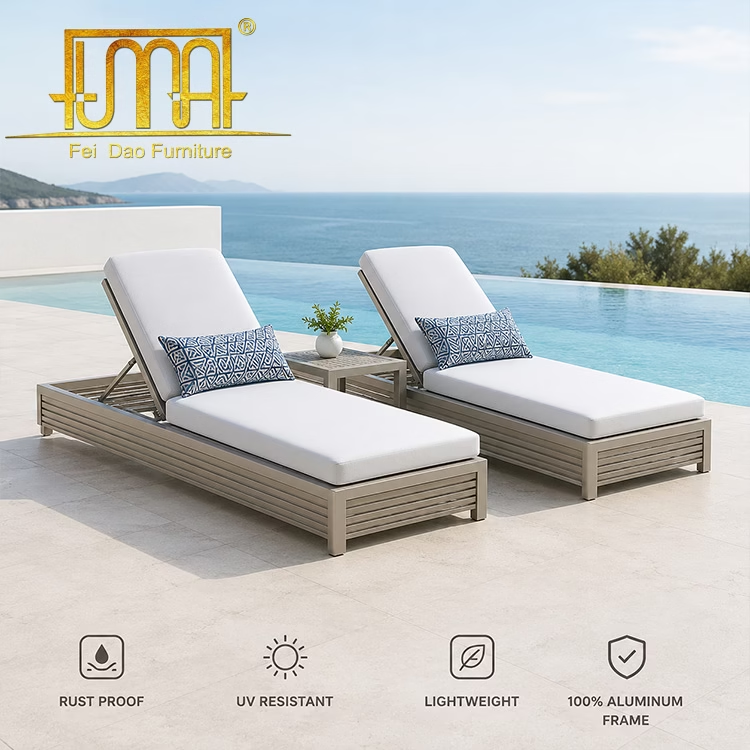
Wicker-wrapped frames and teak both show up on pool decks, and both have their place. But full aluminum solves a specific problem hospitality buyers care about more than residential ones — it’s light enough for housekeeping staff to move, stack, and reposition without a cart or a second person, and there’s no woven layer to fray, discolor, or trap moisture against the frame after years of chlorine exposure. Teak needs periodic oiling to hold its color. Wicker eventually needs re-wrapping. A well-finished aluminum frame mostly just needs a rinse.
That doesn’t mean every aluminum lounger performs the same, though. The frame is only as good as the alloy, the welds, and the coating over it, and that’s exactly where a lot of the cost-cutting on cheaper loungers happens — quietly, before the piece ever gets photographed for a catalog.
The Recline Mechanism: Where Loungers Actually Break
Ask any hotel maintenance team what fails first on a sun lounger fleet, and the answer is almost always the recline hinge — not the frame, not the cushion. A lounger gets adjusted constantly all day long by guests who aren’t gentle with it, and a weak hinge loosens, sticks, or snaps within a season of that kind of abuse. Look for a mechanism with multiple locked positions (five or six is standard on better models), built from a separate, reinforced steel or aluminum bracket rather than a thin stamped piece welded straight onto the main frame tubing.
Worth asking a supplier how the recline latch gets tested, and whether replacement hinge parts are sold separately. A lounger with a failed hinge is often fine everywhere else structurally — being able to swap just the hinge instead of retiring the whole piece saves real money across a large fleet.
Wheels, Handles, and Actually Moving the Thing
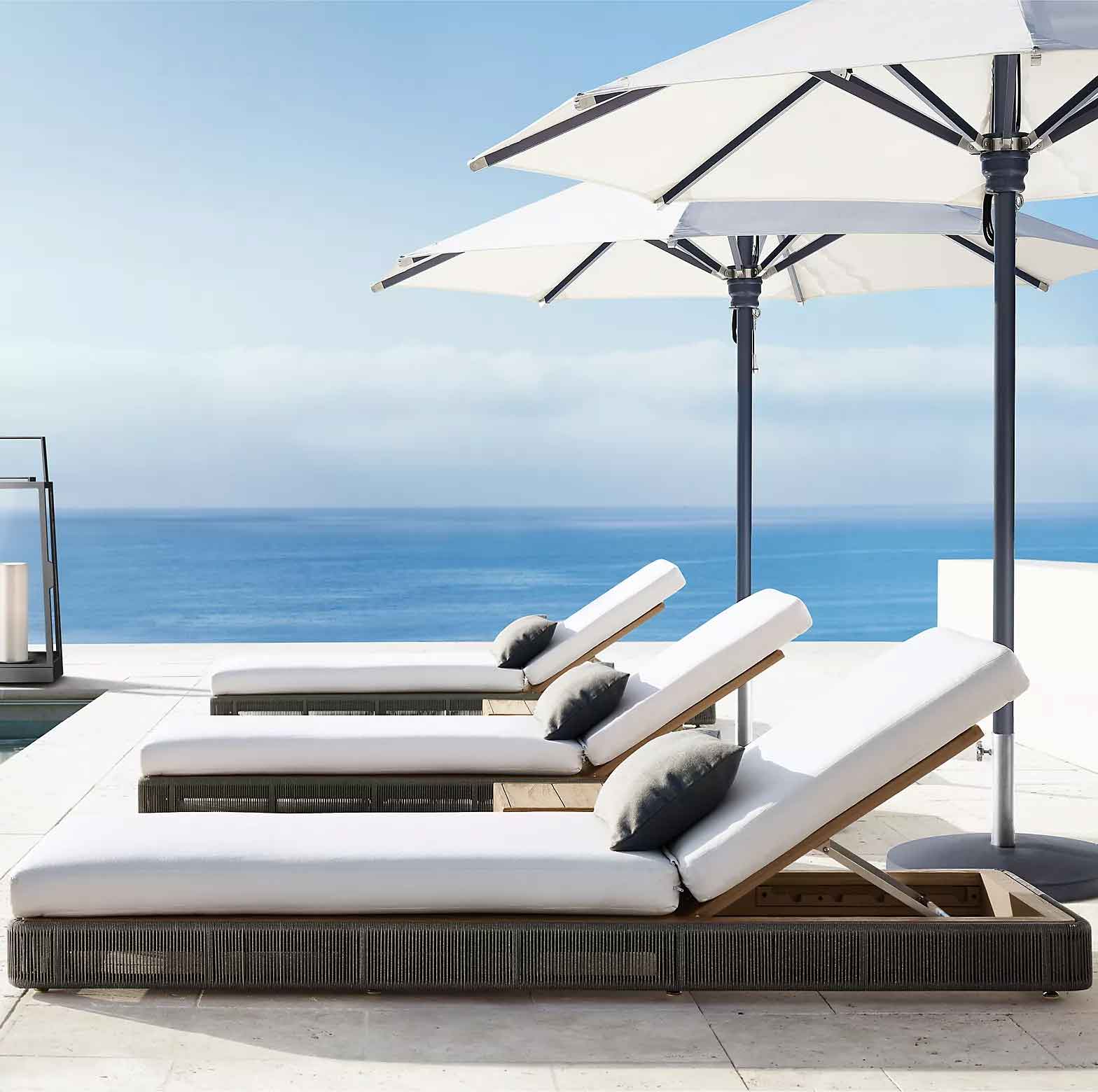
A sun lounger that can’t be moved easily by one staff member turns into a problem fast on a property running dozens of them. Front wheels show up on better models, letting one person tilt and roll a lounger across tile or pavers instead of dragging it, which also protects both the deck surface and the lounger’s feet from wear. A molded handle at the head or foot end — sometimes wrapped in synthetic rope to match the frame’s look, the way it is on some of Feidao’s aluminum lounger models — makes repositioning and stacking noticeably easier for staff doing it dozens of times a day.
Stackability matters more than most buyers think about upfront. A lounger designed to nest cleanly with others saves real storage space during the off-season or a slow week. A bulky, non-stacking design eats up a storage room fast once you’re dealing with fifty or more units.
Powder Coating: The Difference Between Five Years and Fifteen
Bare or lightly painted aluminum will still corrode over time, especially near saltwater pools or coastal properties where salt air speeds the whole process up. A proper powder-coated finish, applied evenly and cured correctly, holds up far better than standard paint and resists chipping from the daily bumps a lounger takes from other furniture, pool equipment, and foot traffic. Ask a supplier about their coating thickness and process rather than just accepting “powder coated” as a given — thin or uneven coating chips at the edges and welds first, and that’s exactly where corrosion starts working its way in.
Cushions: Built for a Hotel Laundry Cycle, Not a Backyard
A residential lounger cushion gets used occasionally and stored most of the year indoors. A hotel lounger cushion gets sat on daily, rained on now and then, and needs to survive repeated cleaning between guests. Quick-dry, open-cell foam earns its extra cost here, since standard foam holds water and starts smelling within days in a humid climate. Removable, washable covers in solution-dyed fabric matter a lot more for a hotel than for a home — stripping and replacing a stained or worn cover, instead of buying an entirely new cushion, keeps a fleet looking consistent without a full re-order.
Ordering at Hospitality Scale
A backyard order is one or two loungers matched to existing patio furniture. A hotel order is a batch that has to look identical across every unit, arrive on a schedule tied to a renovation or opening date, and hold up to a maintenance team that isn’t going to treat each piece delicately. Ask a manufacturer directly about their minimum order quantity for aluminum loungers, whether they can guarantee consistent frame color and cushion fabric across a large batch, and how they pack loungers for container shipping to keep frames from scratching in transit.
Frequently Asked Questions
Why do hotels use aluminum sun loungers instead of teak or wicker?
Aluminum is light enough for staff to move and stack without extra help, and it skips the woven layer that can fray or trap moisture the way wicker does over years of pool chemical exposure. Teak needs regular oiling to hold its color; a well-coated aluminum frame mostly just needs rinsing.
What actually breaks first on a hotel sun lounger?
Usually the recline hinge, not the frame or the cushion. Constant daily adjusting by guests wears down weak hinge mechanisms faster than anything else on the piece — which is why hinge quality matters more than most buyers expect going in.
Does powder coating really matter for pool furniture?
Yes, especially near saltwater or coastal properties. A properly applied powder coating resists chipping and corrosion far better than standard paint, and thin or uneven coating tends to fail first at welds and edges — exactly where rust gets its start.
Should hotel lounger cushions have removable covers?
Helps a lot at hospitality scale. Stripping and replacing a worn or stained cover, instead of buying a whole new cushion, keeps a large fleet looking consistent and cuts down on replacement costs over time.
Can a manufacturer match frame color and fabric across a large hotel order?
Most manufacturers set up for hospitality orders, Feidao Furniture included, can hold consistent frame color and cushion fabric across a full batch. Worth confirming minimum order quantity, color-matching process, and packing method directly before committing to anything in bulk.
Where This Fits at Feidao Furniture
Foshan Feidao Furniture Co., Ltd. has manufactured outdoor furniture since 2009, running an office, factory, and exhibition hall that covers more than 6,000 square meters. Models like the Good Quality Sun Lounger reflect the points covered above — an aluminum frame built for repeated daily use, paired with substantial cushions and a rope-wrapped handle detail that makes staff handling easier. Frame color, cushion fabric, and packing can all be customized for hotel, resort, and beach club orders.
Browse the full Full Aluminum Sun Lounger range or the broader Sun Lounger category to compare frame options, or contact Feidao directly for a quote on a hospitality-scale order.
Welcome to follow our Instagram and TikTok.
Or contact us directly.
Want to read another article? Please click this: Single-Seat Teak Sofas for Patios: What Actually Determines Quality